Everyone wants to be part of the Frieze Fairs as London’s art scene reaffirms its momentum
This year’s edition of Frieze London and Frieze Masters have closed their door after taking the central stage in the Regent’s Park from October 15th through 19th. The Fairs drew an estimated 90,000 visitors from 108 countries, bringing together galleries, artists, collectors, curators and institutions from around the world for five days of hectic art encounters, sales, talks and city-wide activity.
A throng of trendy visitors, collectors, dealers and celebrities have gathered for the annual celebration of global art at the bustling booths of 168 galleries from 43 countries at Frieze London, and of some 120 exhibitors from 26 countries at Frieze Masters. This year’s Frieze London’s organisers have reinforced the concept of the redesigned layout at Frieze Contemporary, that placed the fair’s emerging exhibitors in a more prominent position close to the entrance of the exhibit, having in mind a rebalance of power in favour of the young galleries, while moving the blue-chip establishment at the back of the visit path.
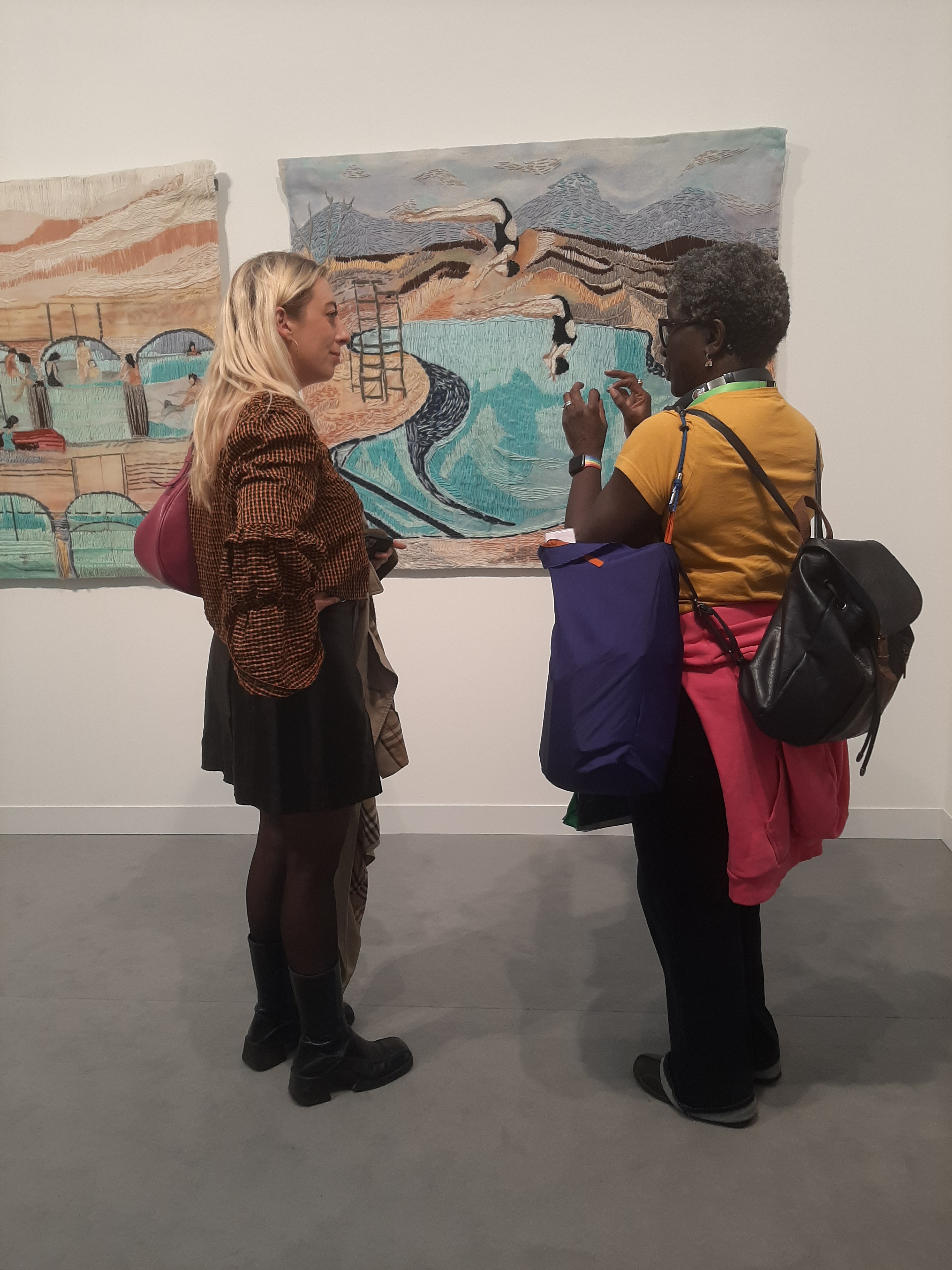
Eva Langret, Director of EMEA Frieze said: ‘Frieze London is a place where discovery and dialogue are at the forefront. This year’s fair carried a strong sense of momentum, with collectors responding at every level of the market — from early-career artists in Focus to established names. The presence of major acquisition funds added further weight, ensuring that new work entered some much-loved public collections. Across the city, the fair was part of a week that brought together galleries, institutions and cultural partners in an engaged and collegial spirit.’
My visit to Frieze London on the preview day started from the curated sections, as usual: the Focus section first, followed by the the new Echoes in the Present section and by the Artist-to-Artist galleries. The following day was entirely devoted to exploring the presentations at the mega galleries at the back of the tent and to Frieze Masters.
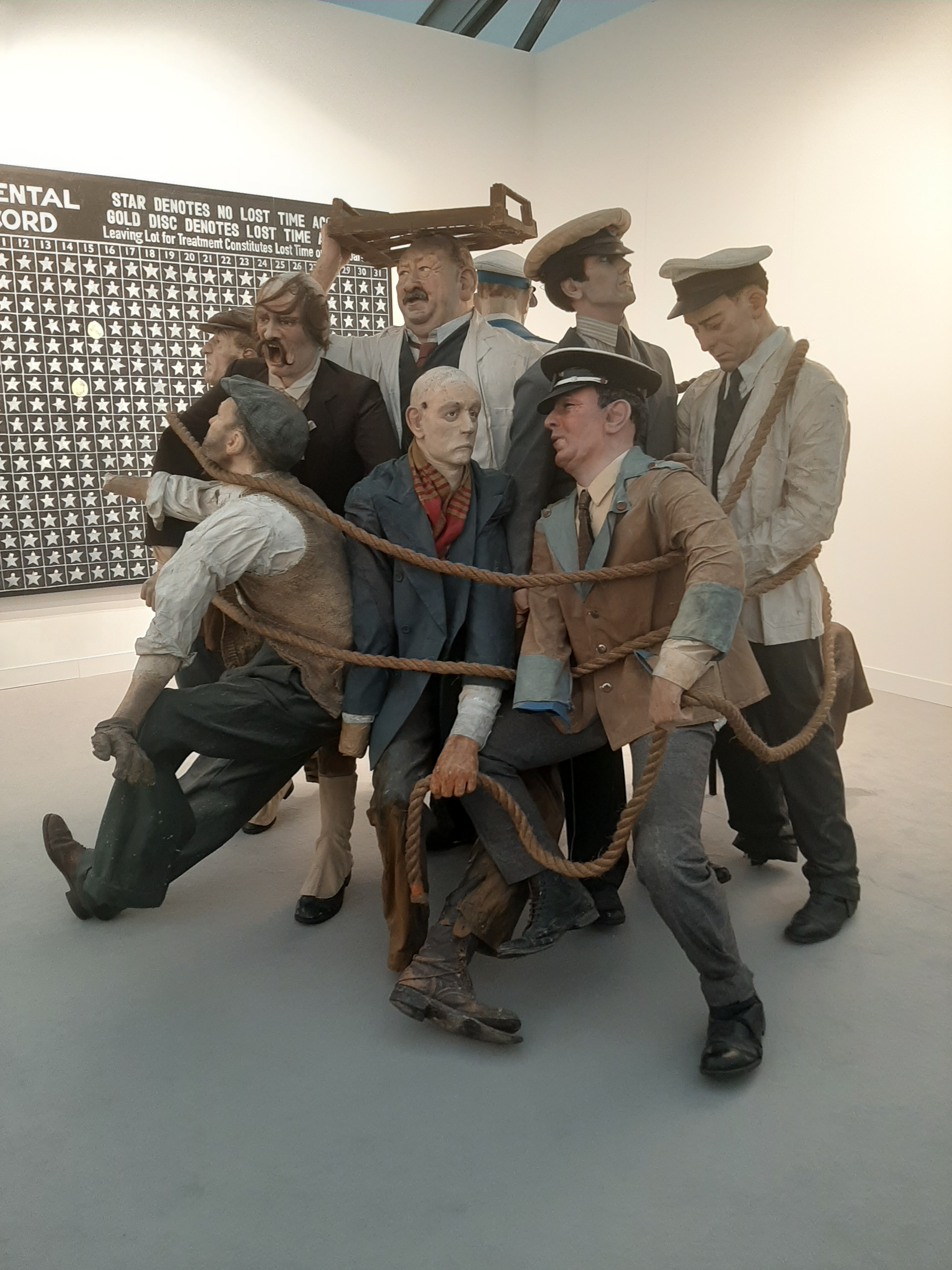
Arguably, the most notable piece on show at this year’s Focus section was Accounts, 2025, the theatrical solo presentation by Alex Margo Arden at Ginny on Frederick’s. The artist used rescued mannequins of male workers from the National Motor Museum (UK) bound together in a looping tug-of-war rope to stage a surreal and chaotic cluster, exposing how certain narratives are constructed and how history is displayed. What once represented authority and established roles in the history of industrial progress, is now presented encircled by the rope, displaying connection and threat at the same time. The booth reportedly sold out at Frieze London.
New to Frieze London 2025 and curated by Dr. Jareh Das, Echoes in the Present explored mutually influential connections between artists from Brazil, Africa, and their diasporas, examining shared histories, cultural exchange and memory across heritage and future perspectives. This new section showcased ten artists across eight galleries, reflecting a dialogue that is a historical product of the transatlantic slave trade.
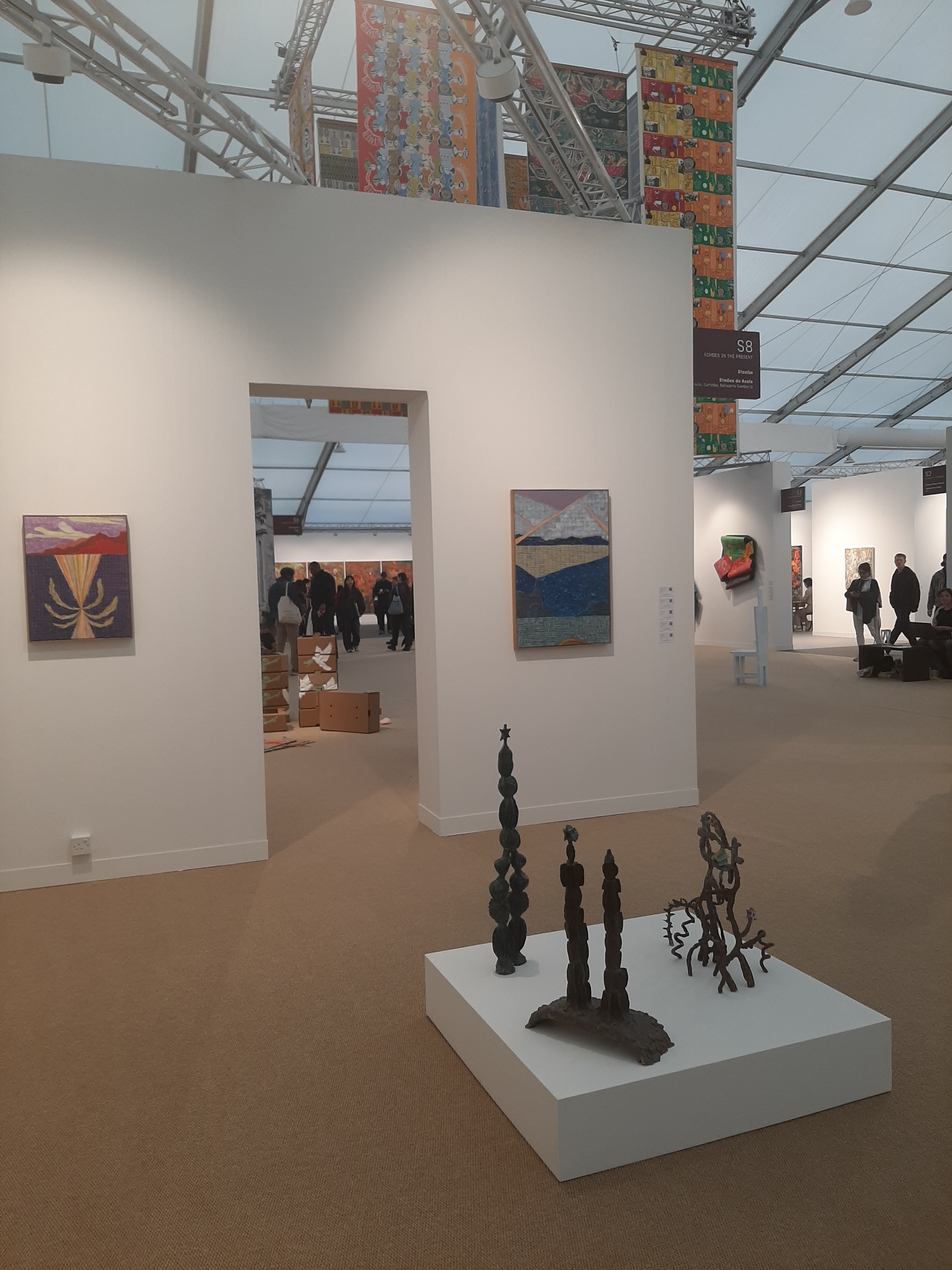
My personal favourite, Curitiba and San Paolo based Simões de Assis Gallery, featured a solo presentation by Brazilian artists Diambe, whose poetics blends sculpture, performance, painting, video, and choreography. The paintings and sculptures on display mixed figuration and abstraction, featuring landscapes, organic forms, and fantastical beings in oil, tempera, pigment, bronze, and beeswax that questioned the hierarchy between humanity and nature.
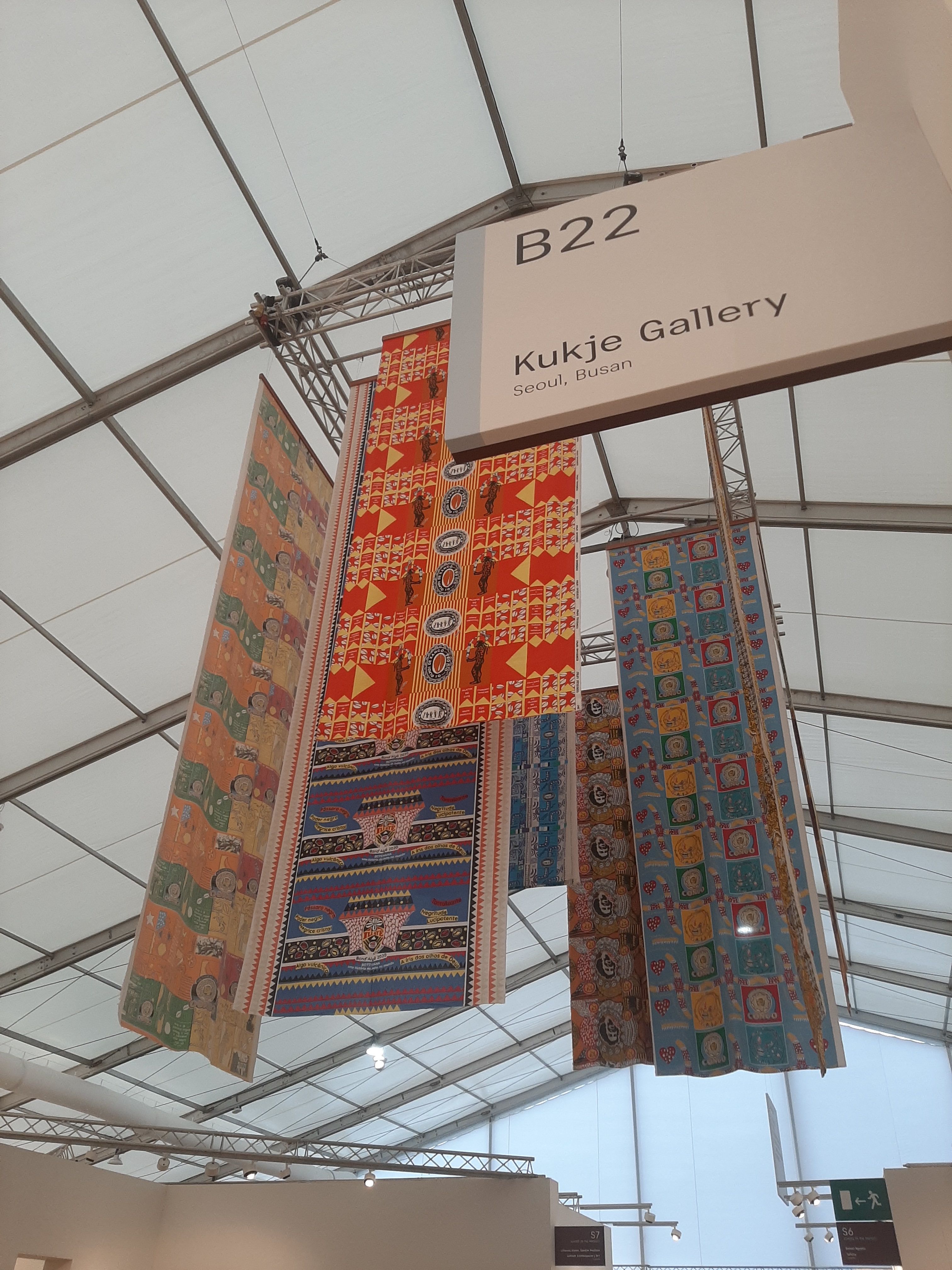
At the centre of the Echoes in the Present section towered a dozen beautiful historical Carnival textiles by San Salvador artist Alberto Pitta, presented by Nara Roesler Gallery. Pitta’s featured work, new paintings and sculptures also on show at the gallery’s booth, was made up mostly of his long – running Mariwô series, developed especially for the occasion. “Màriwó (Elaeis guineensis) is the leaf of the oil palm, a sacred tree in Candomblé, the religion in which Pitta was raised. Each branch of the plant is carefully shredded and hung on the doors and windows of terreiros and casas de santo, to ward off evil and protect the energy of these Afro-Brazilian religious ritual spaces. Pitta’s visual trajectory is characterized by a distinctive interest in Afro-Brazilian cultures, spirituality, and graphic experimentation. With a practice that spans over four decades, his work is still inextricably tied to his personal history”. *Source: Nara Roesler Gallery presentation at Frieze 2025
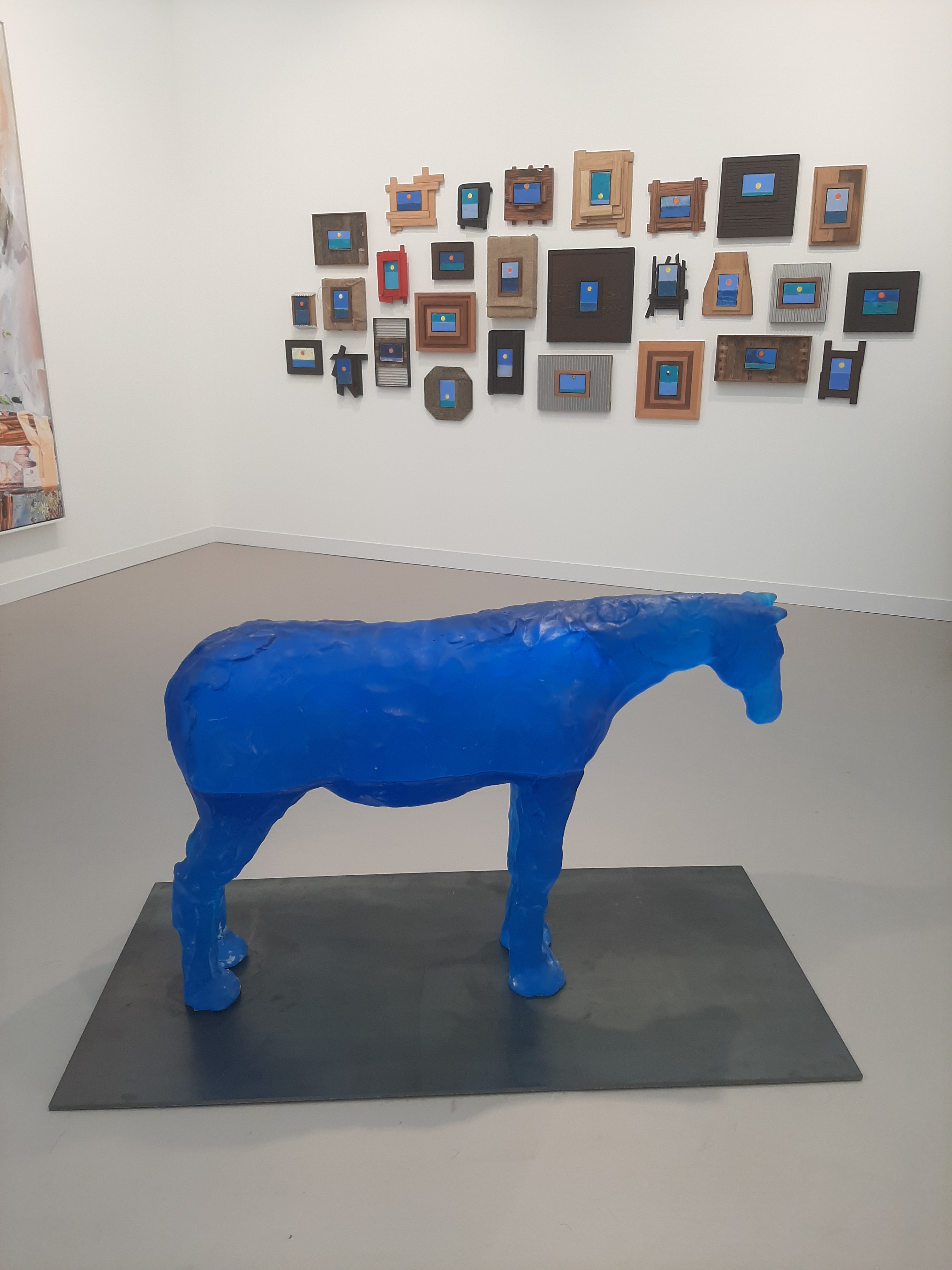
Moving on to the mega galleries section, Sadie Coles HQ gallery was one of my favourite booths: the presentation at the veteran London gallery defined a convincing and reassuring counterbalance to the uncertainties brought about by the post-brexit wave over the recent years. Featured artists include, among others, Isabella Ducrot, Urs Fischer, Dada Khanyisa, Lucia Laguna, Sarah Lucas, Victoria Morton, Nabuqi, Yu Nishimura and Ugo Rondinone.
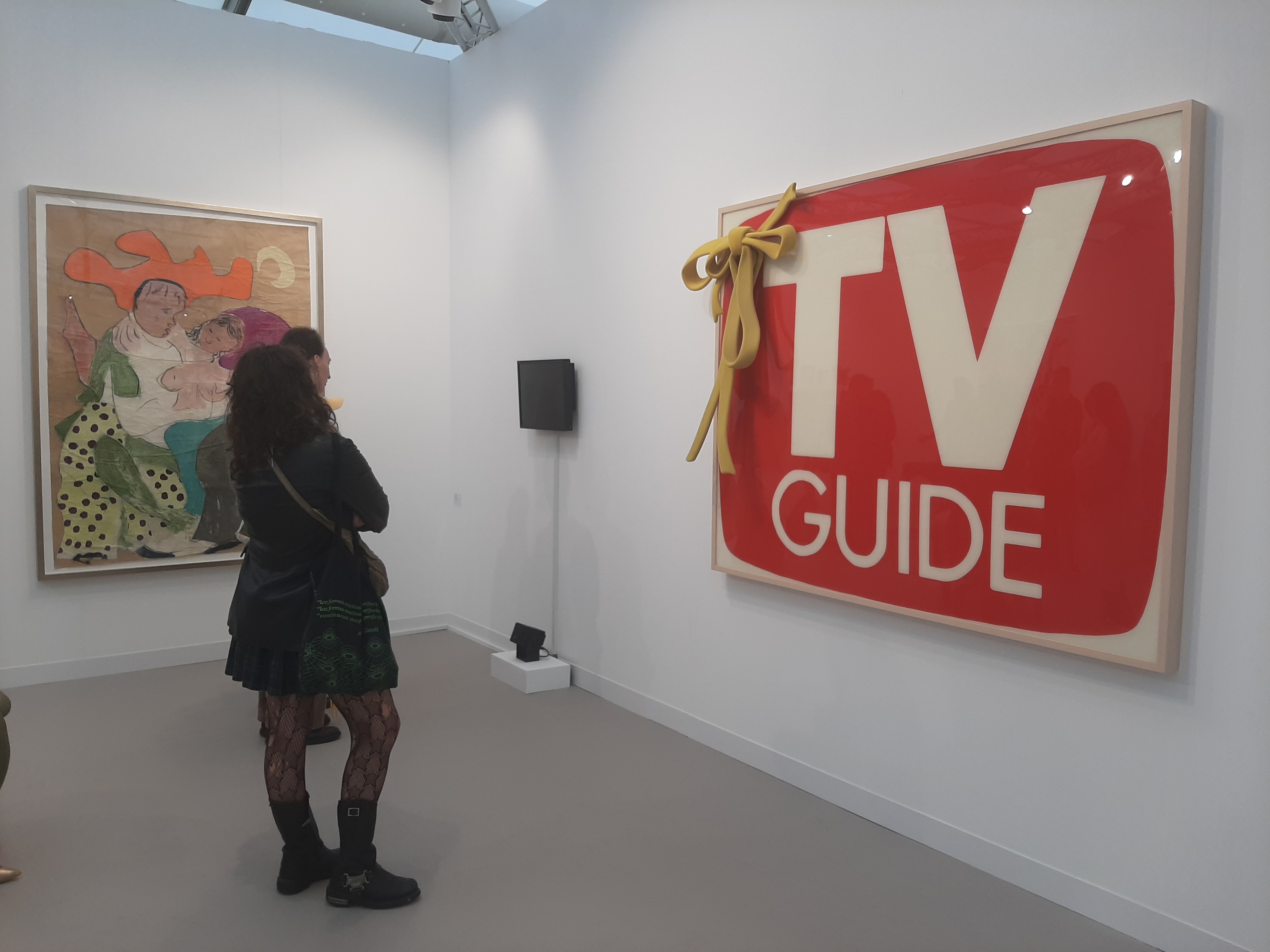
Gagosian presented new works by Los Angeles native Lauren Halsey, whose Afrofuturist and Funk-inspired installations and sculptures explore themes of community, identity, and civic engagement. The gallery sold out its solo booth in the early hours of Frieze London’s opening day.
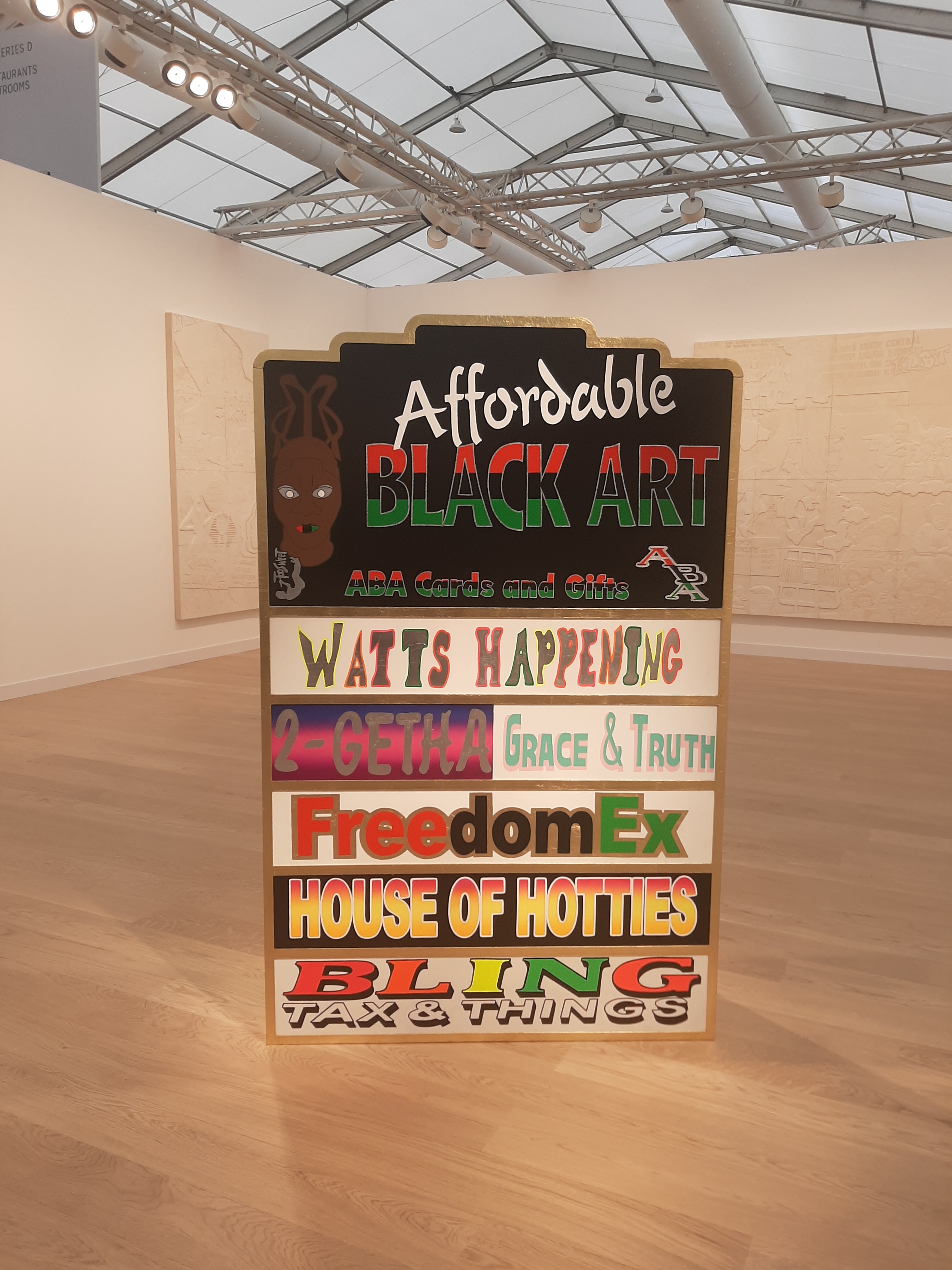
Lisson Gallery offered a carefully curated selection of works that reflect on the fragile beauty of the environment and the consequences of human impact on its ecosystems. Bringing together sculpture, installation, painting, film and photography, presented artists included Sarah Cunningham, Ryan Gander, Hugh Hayden, Leiko Ikemura and Otobong Otobong Nkanga, whose massive scale textile work dominated one side f the booth.
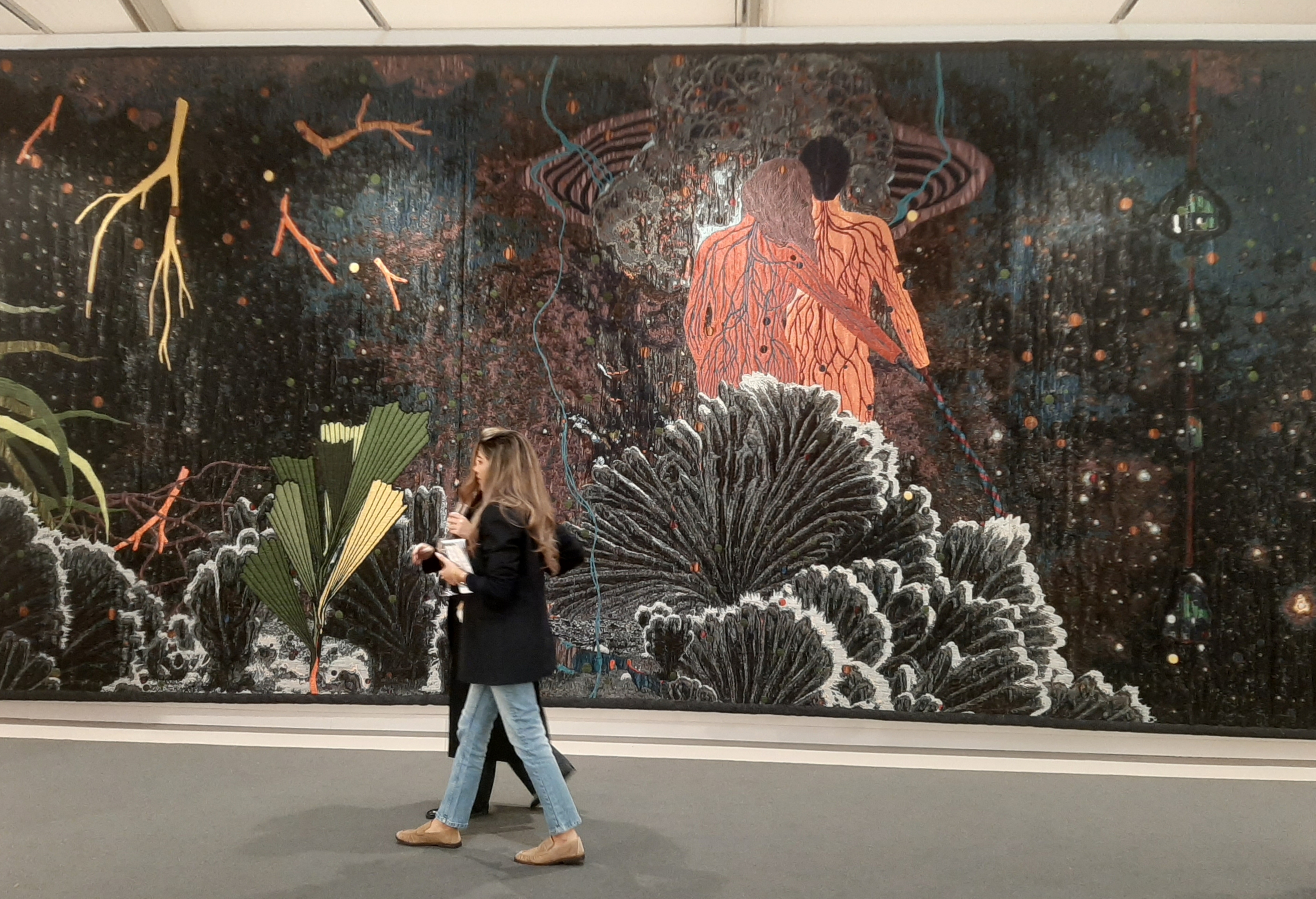
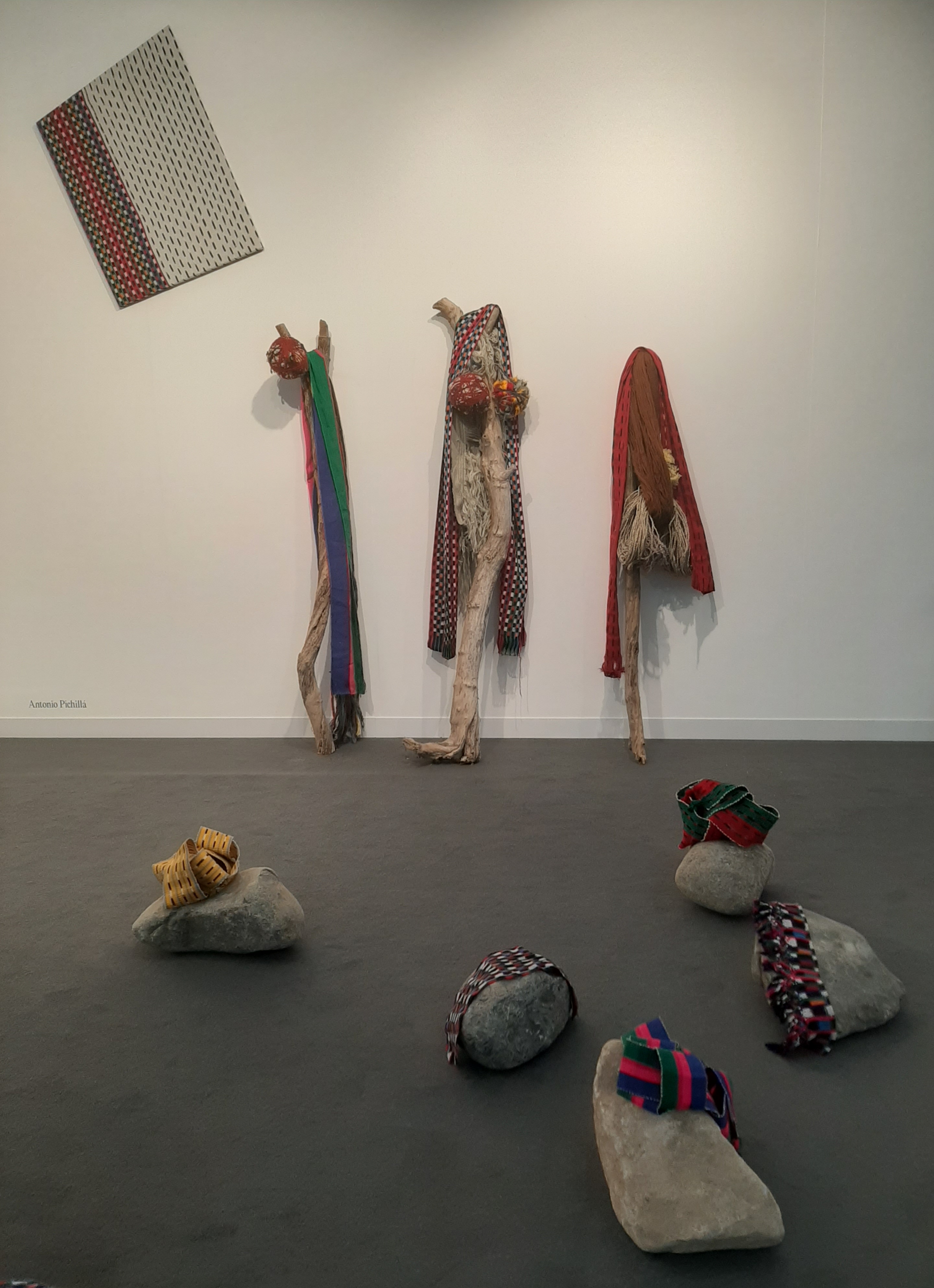
Portas Vilaseca presented a solo show by Guatemalan Maya-Tz’utujil artist Antonio Pichillá Quiacaín, bringing textile-based works, sculptures and video that draw from ancestral weaving traditions to challenge colonial narratives and affirm Indigenous cultural resilience.
The predominant feeling that emanated from the event was a fair balance between commercial purpose and curatorial perspective, as well as a sense of increasing determination to reaffirm London’s position as a cultural capital and a vital centre for the art market, in view of the growing rivalry with the French competitor Paris Arts Basel.
The overall results of the transactions, as issued by the Fairs’ organisers and confirmed by the galleries involved, have revealed a lively market with steady sales figures, which was witnessed by the animated atmosphere across the fairgrounds and by the busy audiences, as cross-cutting and engaged as ever. Also, the strong curatorial shift supporting a more outstanding position of young galleries at the entrance of Frieze London, has confirmed the intent of the Fair towards a more inclusive and more collective experience of art.
