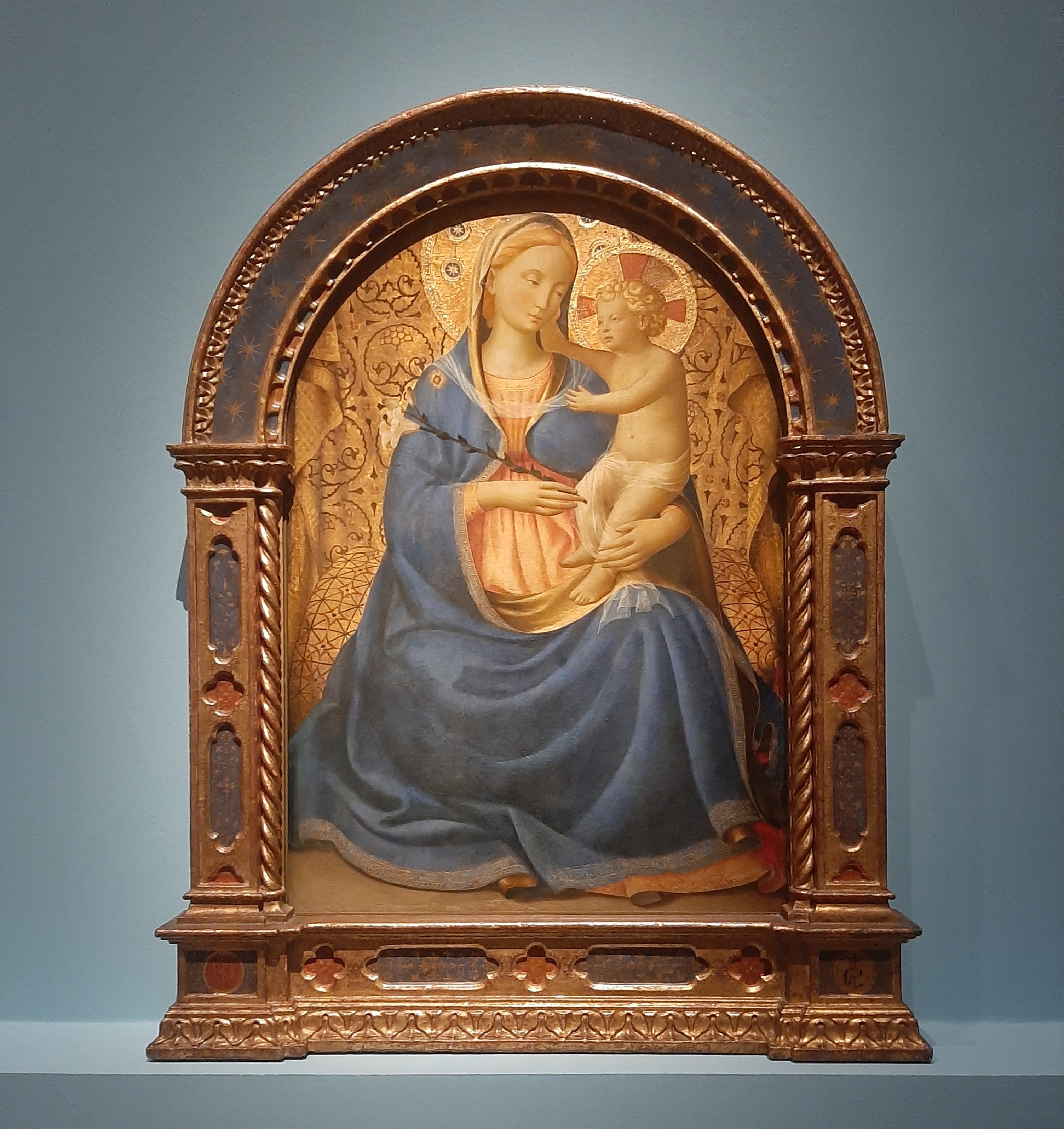
Fra Angelico: a monumental exhibition of XV century Renaissance masterpieces reunited at Palazzo Strozzi and Museo di San Marco
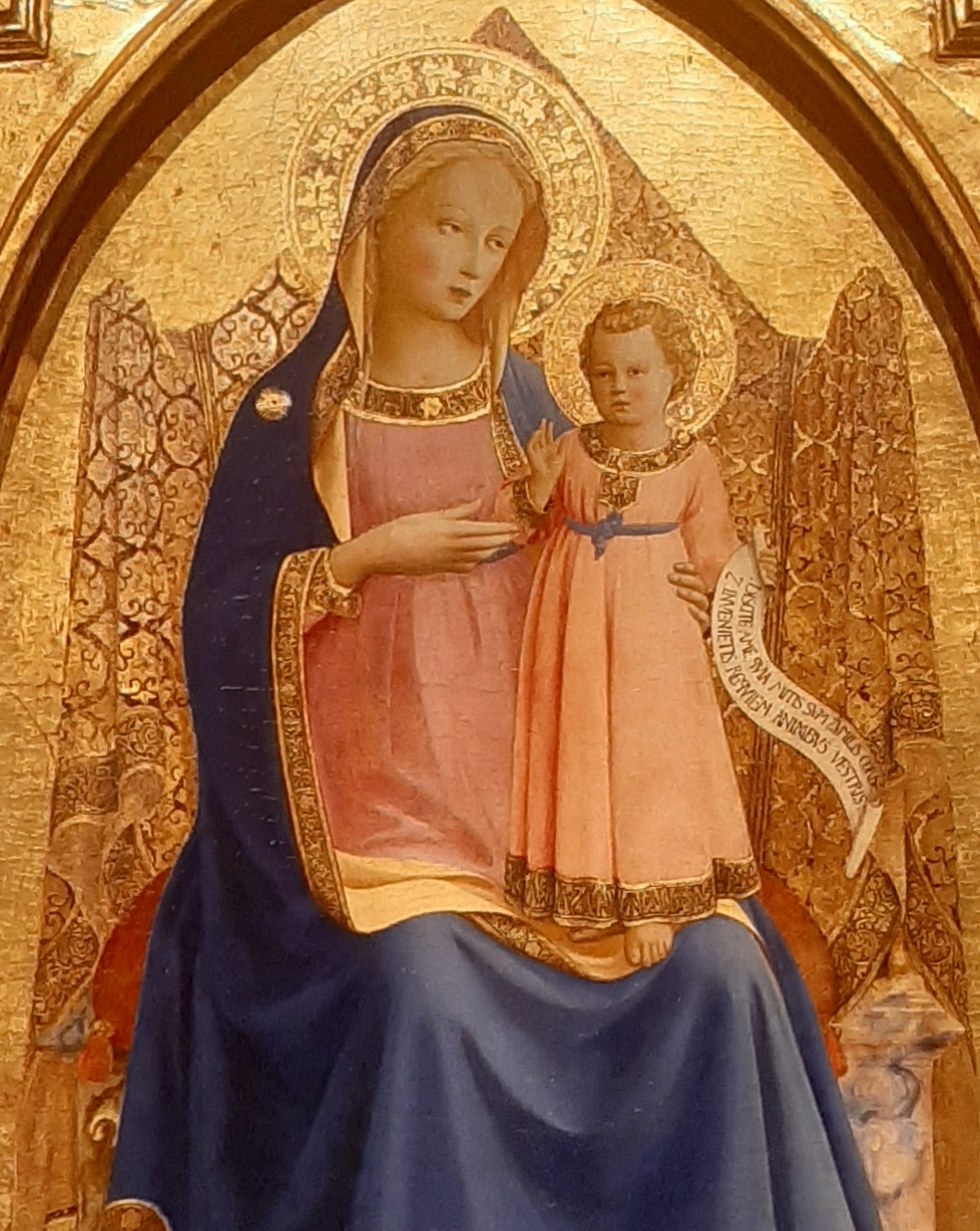
Fra Angelico, (Guido di Piero, Fra Giovanni da Fiesole; Vicchio di Mugello c. 1395 – Rome 1455) is the major monographic exhibition now on show on a double-venue setting in Florence and devoted to one of the greatest masters of fifteenth-century Florentine art and of all time. The painter friar, who has been defined as “the most accomplished painter in Florence around 1420” (Bonsanti, 2009), is celebrated for his innovative mastery of perspective and light in his paintings and for the measure of his style blended with the purity of his visual language.
The exhibition is showcased across two different venues in town, Palazzo Strozzi and Museo di San Marco, featuring masterpieces that explore the artist’s life, career, influences and evolving style from the late Gothic legacy into the principles of the emerging Renaissance era.
Fra Angelico marks the first large exhibition in Florence reviewing the entire artist’s production and tracing the results of recent studies and research on Beato Angelico, exactly seventy years after the last monographic show held in 1955, first in the Vatican and later in the Museo di San Marco in Florence. Although over the last few decades the XV cent. master has been subject of other exhibitions both in Italy and abroad – among others at the Metropolitan Museum of Art in New York (2006), in Florence (2003, 2007–08, 2011), Rome (2009), Pontassieve (2010), Paris (2011–12), Boston (2018), Madrid (2019) – this initiative stands out for the full participation of the Museo di San Marco and for the fresh conceptual and scholarly approach to the artist.
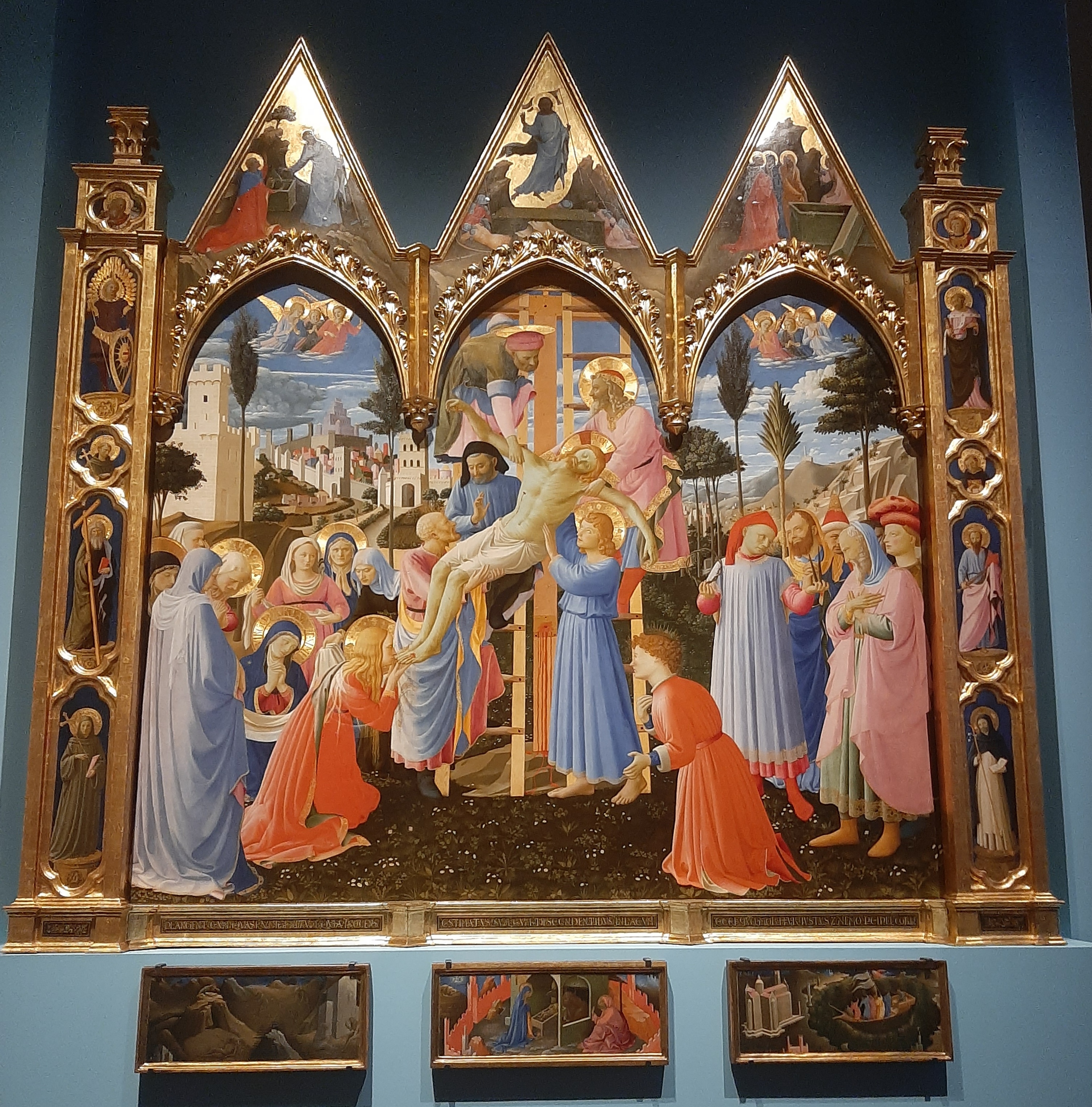
Fra or Beato Angelico as he’s later known, is renowned for his artistic practice that greatly contributed to the redefinition of religious painting in the early Florentine Renaissance, through the influence and constant dialogue with his other great contemporaries, such as Lorenzo Monaco, Masaccio, and Filippo Lippi, as well as sculptors like Lorenzo Ghiberti, Michelozzo, and Luca della Robbia. The works on display demonstrate how the artist developed his own personal visual language throughout the years, evolving from the Gothic gospel prescribing a more doctrinal function of religious art and achieving an unmatched poise between spiritual and religious devotion and the minimalist elegance of his manner.
Curated by Carl Brandon Strehlke, Curator Emeritus of the Philadelphia Museum of Art, with Stefano Casciu, Regional Director of Musei nazionali Toscana, and Angelo Tartuferi, former Director of the Museo di San Marco, this unique exhibition is organised as a collaboration among the Fondazione Palazzo Strozzi, the Ministero della Cultura – Direzione regionale Musei nazionali Toscana and Museo di San Marco.
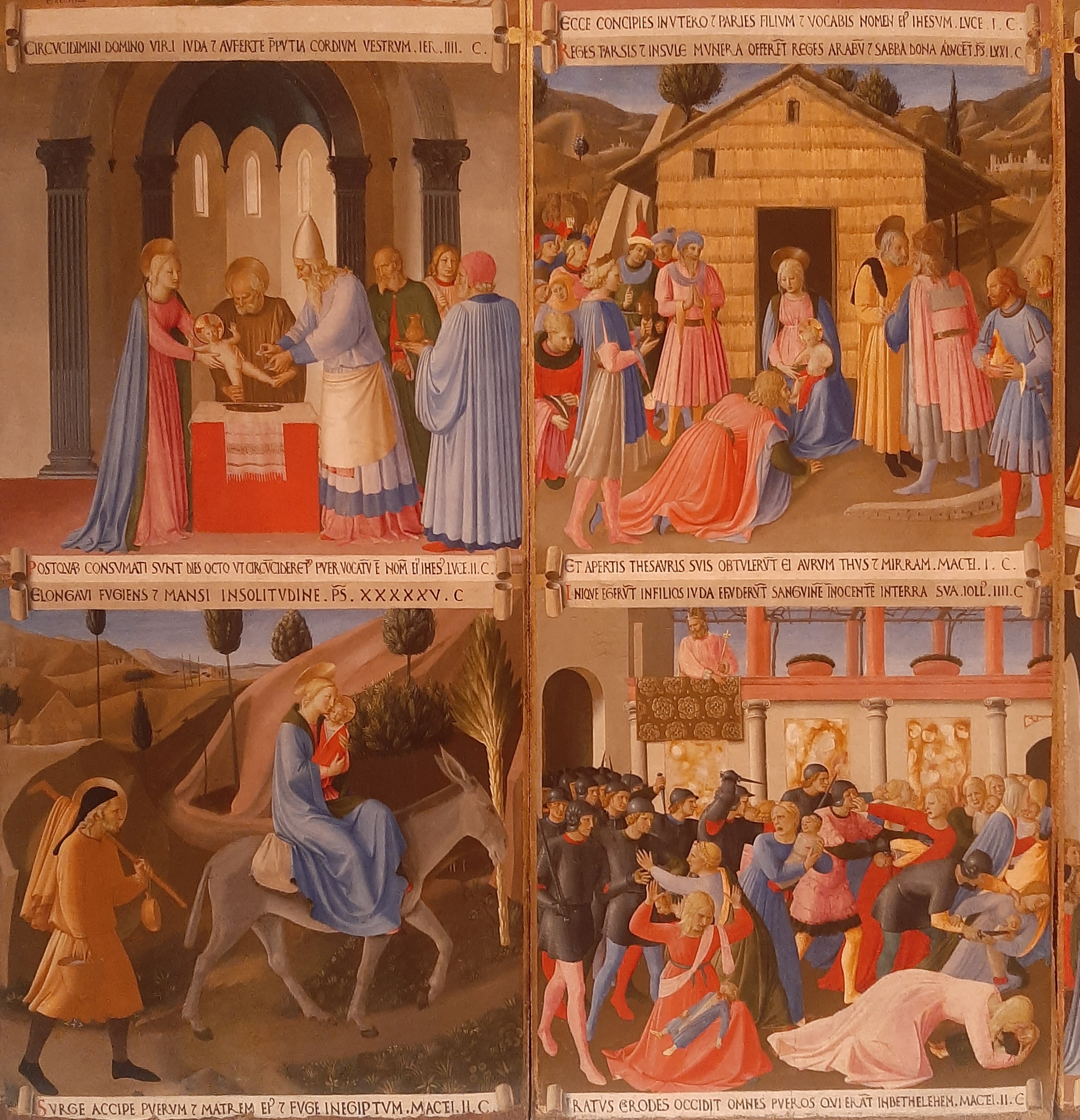
The exhibition brings together more than 140 works of art across the two venues featuring paintings, drawings, illuminated manuscripts and sculptures from leading institutions such as the Louvre in Paris, the Gemäldegalerie in Berlin, the Metropolitan Museum of Art in New York, the National Gallery of Art in Washington, D.C., the Vatican Museums, the Alte Pinakothek in Munich, and the Rijksmuseum in Amsterdam, as well as numerous libraries, churches, and private collections both in Italy and abroad.
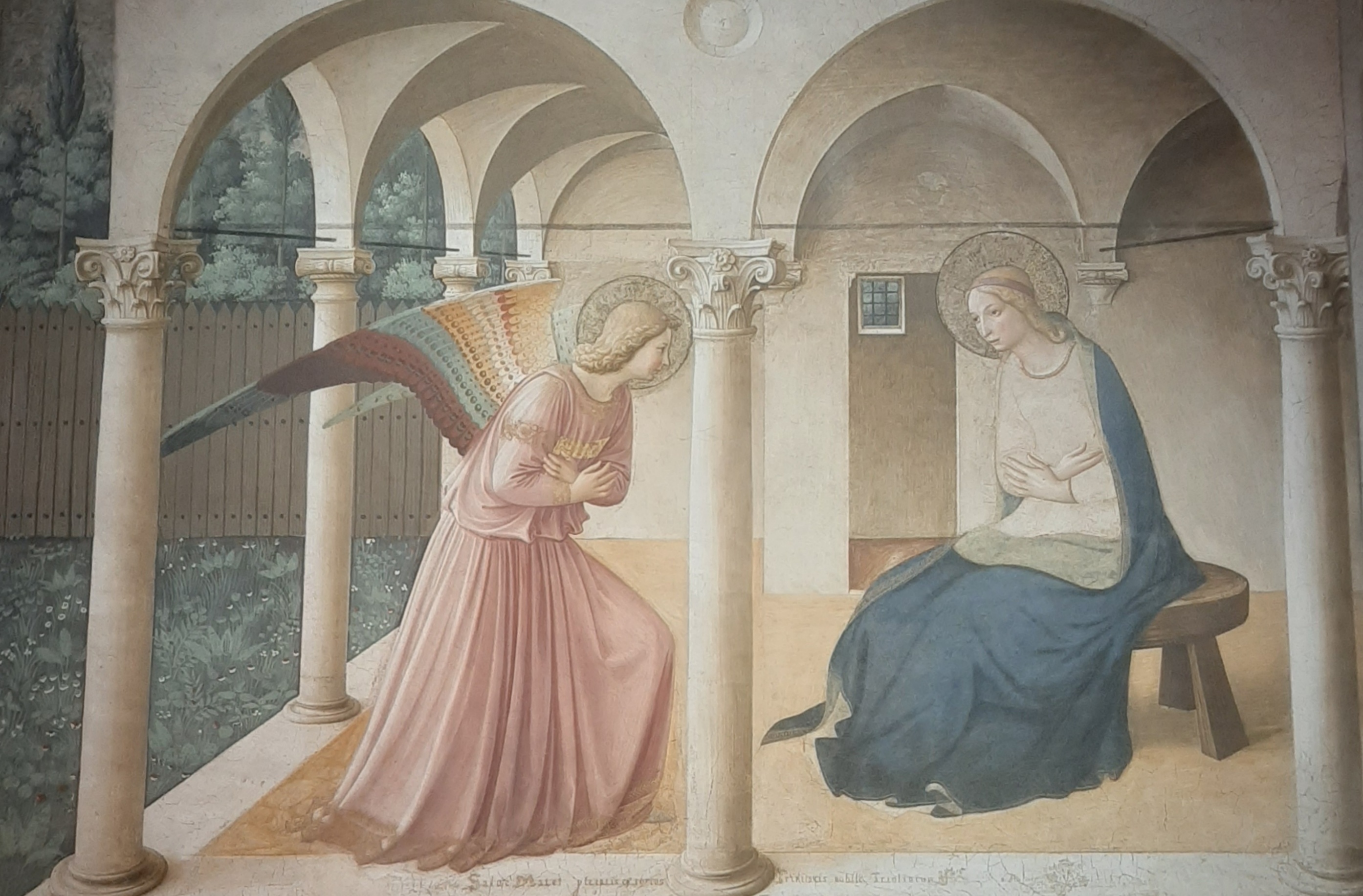
The exhibition path at Palazzo Strozzi develops through eight sections, highlighting both chronological and thematic concepts and retracing the artist’s production from his beginnings, through the renewal of the figurative language, introducing a new attention to human forms portraited in defined and realistic spaces and set within a pictorial perspective composition. The closing rooms feature the great commissions such as the Cortona Triptych and Montecarlo Annunciation Altarpiece, and culminates with the works produced in Rome for the Vatican and for the Medici family in his final years. The itinerary at the Museo of San Marco begins at the ground-floor hall that bears the artist’s name, where his early works are presented, into the Library, with two sections dedicated to Angelico illuminator and to humanist manuscripts once kept here and culminating with the world-renowned frescoes on the upper floor of the convent, including the frescoed scenes in the dormitory, the Virgin of the Shadows and the Annunciation welcoming visitors at the top of the stairs. Marco Mozzo, Director of Museo di San Marco, in his curatorial piece for the exhibition catalogue affirms about the Annunciation that “The spacial composition has its ideal centre in the face of the Virgin, although she’s set on the right of the scene” and continues “The painter achieved a perfect sysntesis between form and content, geometry and symbol. According to some, here we are in front of an example of ‘spiritual geometry'”.
One of the highest achievements of this show, in my opinion, is the opportunity for both first-time visitors to discover these impressive masterpieces at the Museo di San Marco and for residents and connoisseurs alike to brush up on the sublime frescoes of the convent’s spaces and be once more entranced by so much beauty and minimalist simplicity.
The Museo di San Marco holds the world’s largest collection of works by Fra Angelico and includes other works of great artistic value, such as the Last Supper by Domenico del Ghirlandaio, panel paintings by Paolo Uccello and Fra Bartolomeo, along with some precious glazed terracotta sculpture by the Della Robbia family. It is housed in the former Dominican convent, designed by Michelozzo on commission from Cosimo the Elder de’ Medici between 1437 and 1443.
It is not easy to sum up such a large and complex endeavour, however a few remarkable facts about the show, from the exhibition conception and design point of view, are:
– the impressive number of loans from some of the most prestigious cultural institutions in the world – one of the winning factors for the curatorial team has likely been the fact that the core pieces were already in Florence
– the extent of the research and new investigations carried out over the last few decades, that have been complemented by a huge ongoing restoration campaign
– the reconstruction of seven large altarpieces by Beato Angelico, that were fragmented mainly during the Napoleonic suppressions of religious institutions and that have been reunited through the numerous loans from around the world (Fiesole Altarpiece, San Pietro Martire Altarpiece, Altarpiece of the Compagnia di San Francesco in Santa Croce called the Franciscan Triptych, Lorenzo Monaco and Beato Angelico Strozzi Altarpiece, Coronation of the Virgin Altarpiece called the Paradiso, Perugia Altarpiece and San Marco Altarpiece.
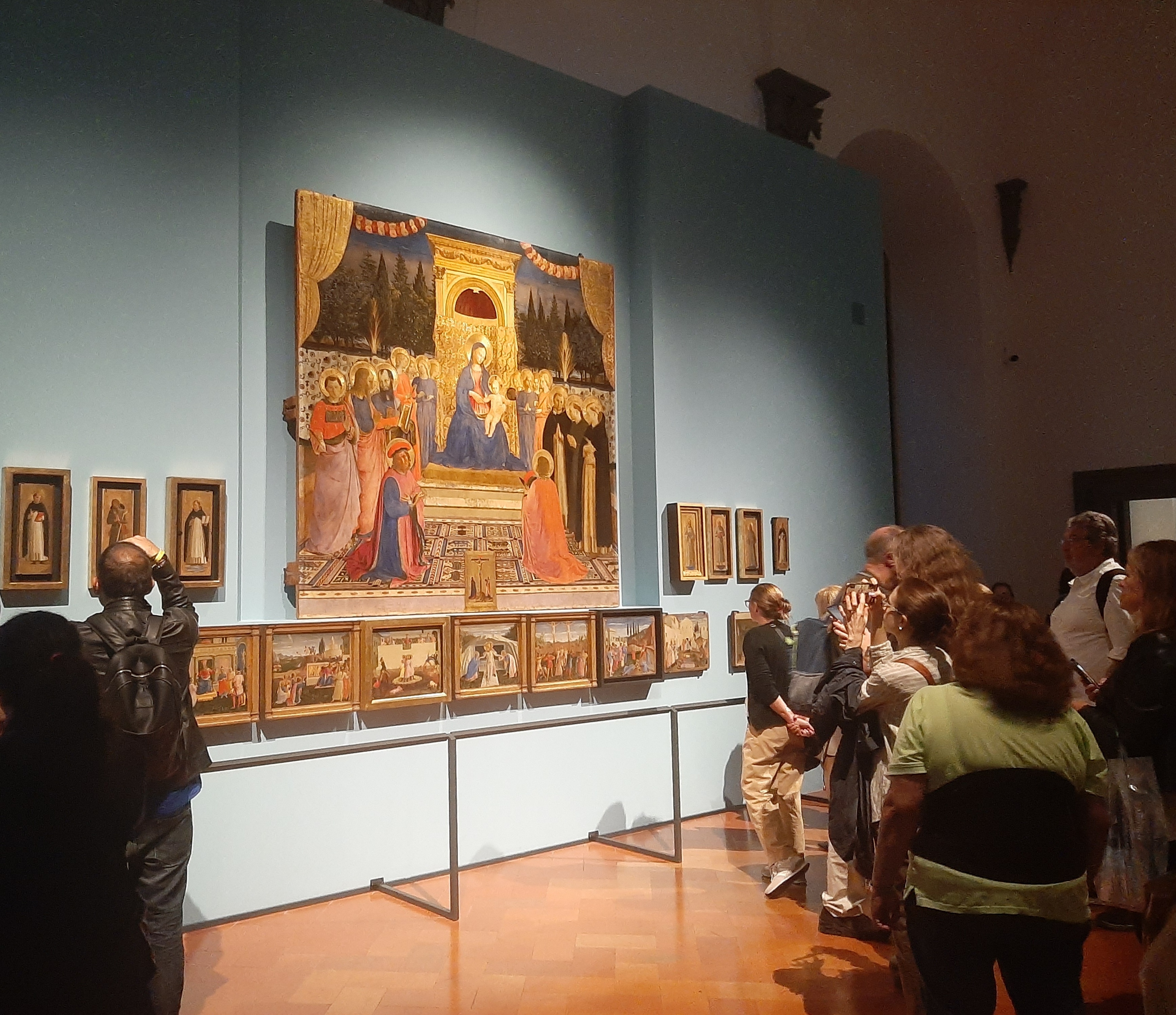
One final remark about the reference to the pioneering employ by the artist of the Renaissance manner known as pittura di luce “painting of light”, as cited in his essay for the exhibition catalogue by co-curator Angelo Tartuferi: “By around 1420 he had established himself as the leading painter in Florence during the last flowering of the Gothic, and within ten years, in the confines of his convent, he emerged as the city’s foremost painter, with a discriminating language from both a stylistic and doctrinal point of view that is nevertheless understandable to all and, moreover, then as now, able to touch viewers’s hearts.”
Fra Angelico
Florence, Palazzo Strozzi and Museo di San Marco,
26 September 2025 – 25 January 2026