Frieze London 2024 review: the difficult art of understanding the art world
The 21st edition of Frieze London and Frieze Masters took place in the Regent’s Park earlier in the month from October 9th through 13th, welcoming the customary busy crowds of visitors, collectors and dealers who animated the bustling booths of some 170 galleries from 43 countries. This year’s fairs presented numerous new features, including a newly-redesigned layout at Frieze Contemporary, that placed the fair’s emerging exhibitors in a more prominent position close to the entrance of the exhibit, while moving the established galleries at the back of the visit path. ‘Visitors this year will find the fair reimagined, with solo presentations and emerging artists front and centre, in a demonstration of Frieze’s commitment to the most exciting art being made today. Our new layout also features more spots for conversation and exchange. These changes promise fresh experiences and new perspectives.’ said fair director Eva Langret. Two major concerns have been crucial to the debate about this year’s Fair: how will the collectors react to the new layout and how will the global art market respond to the recent competition between London’s Frieze and Art Basel Paris? The fast-growing success of the French fair – that took place at the renovated Grand Palais in Paris between 18th October through 20th – together with the repercussions of the Brexit and the unfavourable tax environment in the UK, have created a feeling of incertitude as to which city would take the lead in the arts market. As reported in an interview to The Art Newspaper, Christies chief executive Guillaume Cerutti argued that “of greater concern is the decline of Europe’s art market as America and Asia charge ahead”. According to the auction house executive each city retains their own specificity and strength as “both fairs excelled presenting complementary rather than competing propositions, attracting collectors and art lovers from all over the world.”
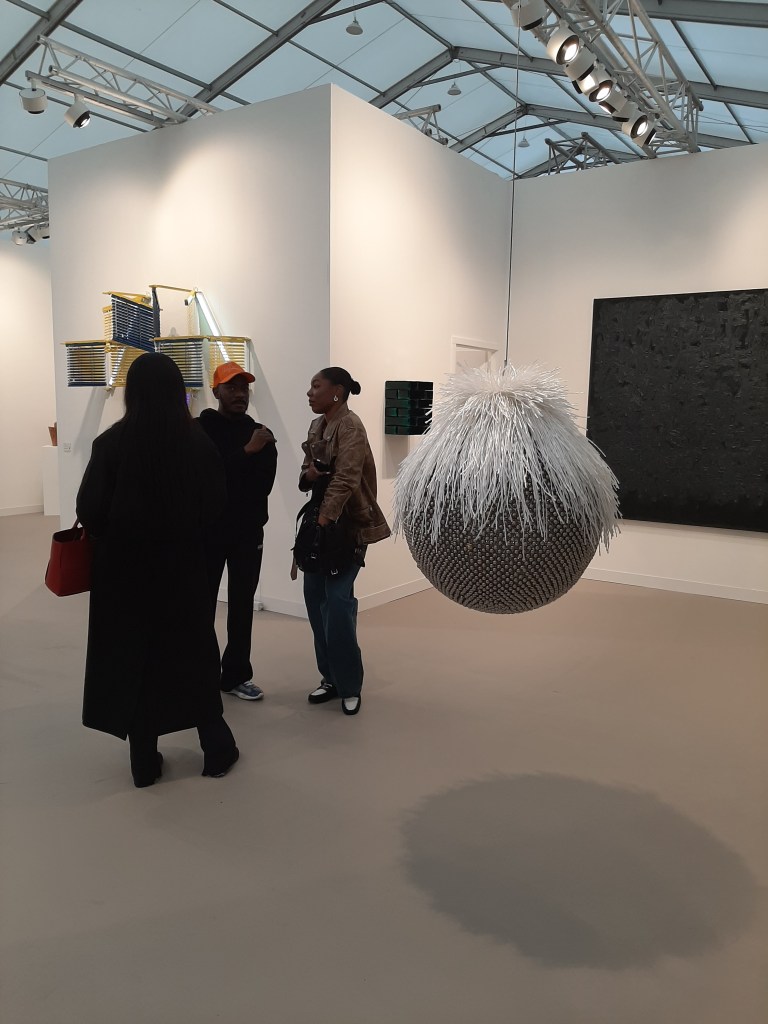
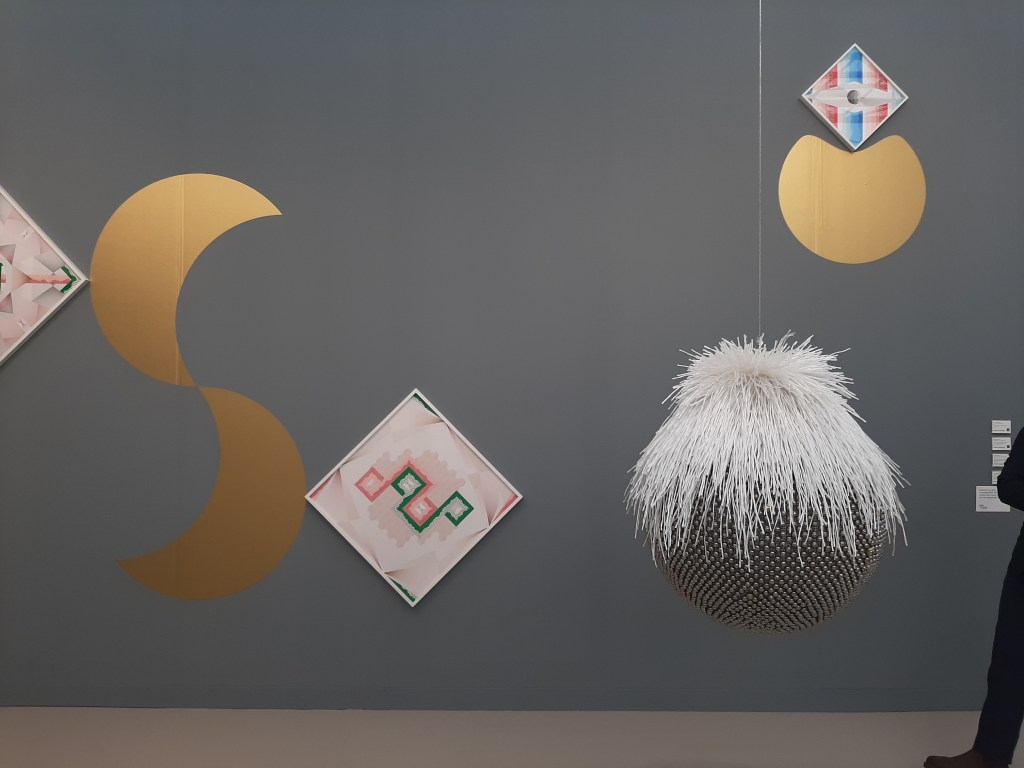
The amount of art on show at Frieze fairs is undoubtedly overwhelming for anybody, even for the most seasoned expert of the art world. It is a very arduous task for simple visitors and for amateurs alike to make sense of it, not to mention to form a thorough opinion of the two sister fairs, presenting works from the 21th century back to prehistory. Choosing a main theme or following an instinctive thread is maybe the most sensible solution to enjoy the captivating spectacle of the fair and at the same time decipher the real rules and dynamics of the international art business system. As for my experience of this edition of the Fairs, it has been as hectic and challenging as ever, though this year I’ve had the pleasure of visiting the previews, which gave me the chance to dilute the experience and absorb the visual charge more gradually. On the first day of visit at Frieze contemporary I decided to concentrate my attention on the curated sections in the first place, leaving the overall display and the mega galleries to a later review. My first choice was Focus, Frieze’s longstanding section featuring 34 solo and dual presentations and fostering a community of young galleries. This year Focus is advised by Joumana Asseily (Founder, Marfa’), Piotr Drewko (Founder, Wschód), and Cédric Fauq (Chief Curator, CAPC musée d’art contemporain, Bordeaux).
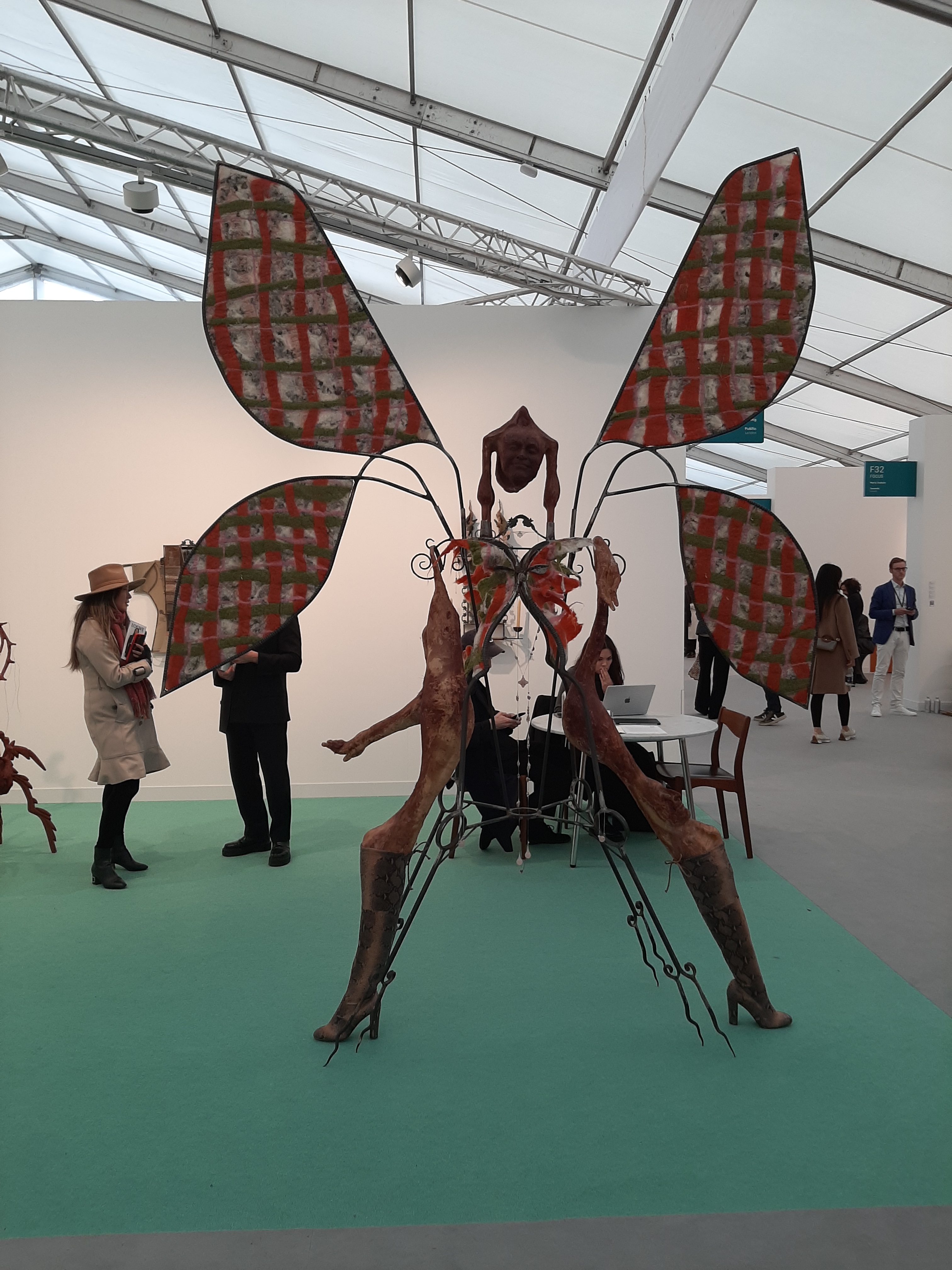
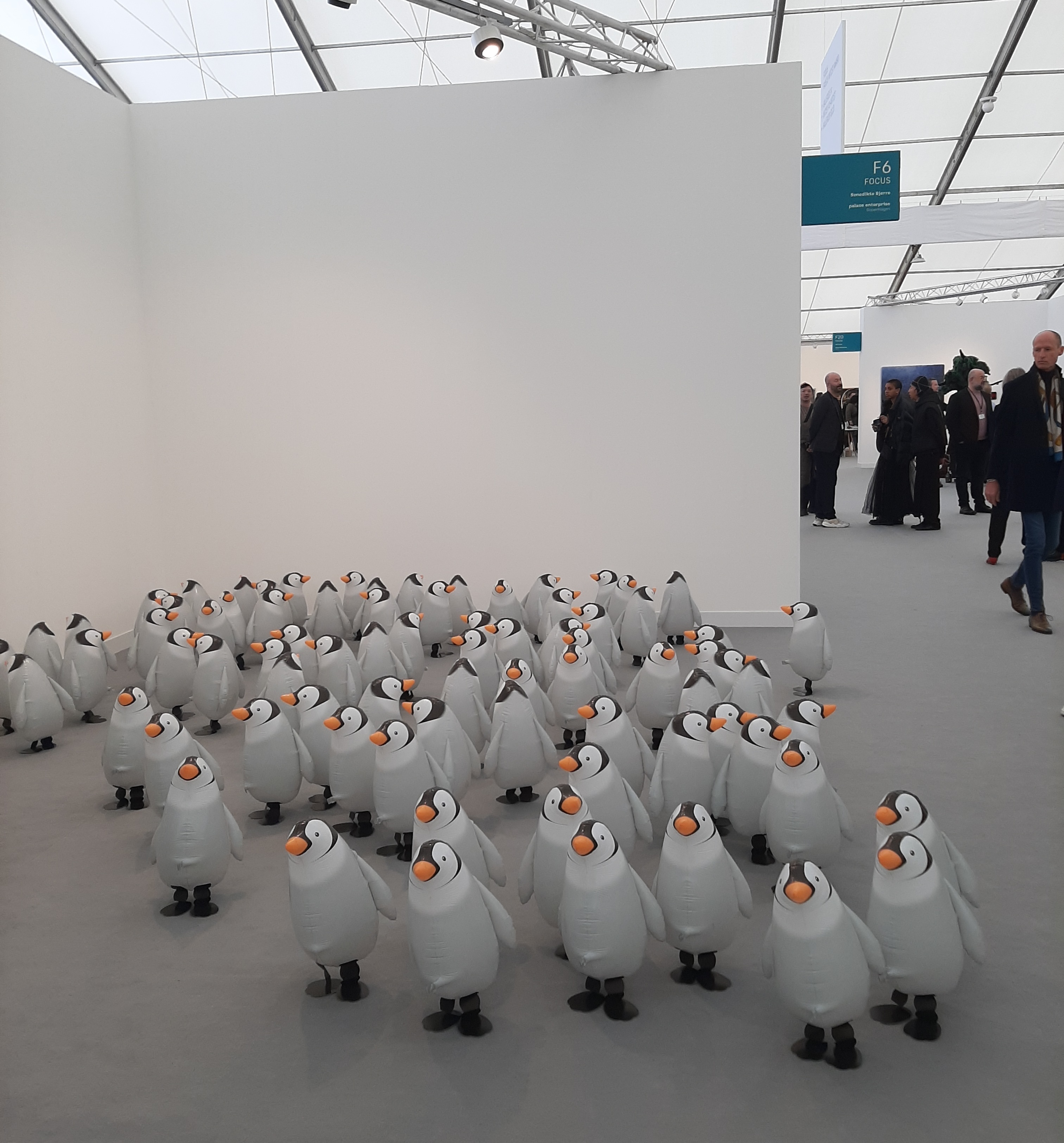
With a newly prominent placement right at the centre of the fair, this year Focus space has featured a great number of new exhibitors that represent London’s young and emerging gallery scene, including Brunette Coleman presenting works by Nat Faulkner, Rose Easton with Eva Gold, Ginny on Frederick with Charlotte Edey, Harlesden High Street with Savannah Harris, Nicoletti with Divine Southgate-Smith, Public with Nils Alix-Tabeling (see the booth view in the pic above), Soft Opening with Dean Sameshima, South Parade with Georgina Hill and Xxijra Hii with Hannah Morgan. One of the highlights of this year’s fair and one of my favourites was the installation showcased at palace enterprise, Copenhagen, featuring The Birds, Benedikte Bjerre‘s 125 bouncing helium penguins, that move on the floor of the booth as people pass. The lovely mass of inflatable aquatic birds offered us a playful though serious reflection on the effects of climate crisis as well as on the issues relating to gender equality in our societies. Moving on through my exploration of the curated sections, I headed to Smoke, a new addition to Frieze London, organized by Hammer Museum curator Pablo José Ramírez. Comprising eight galleries, the section is dedicated to ceramic works by artists who explore diasporic and Indigenous histories.
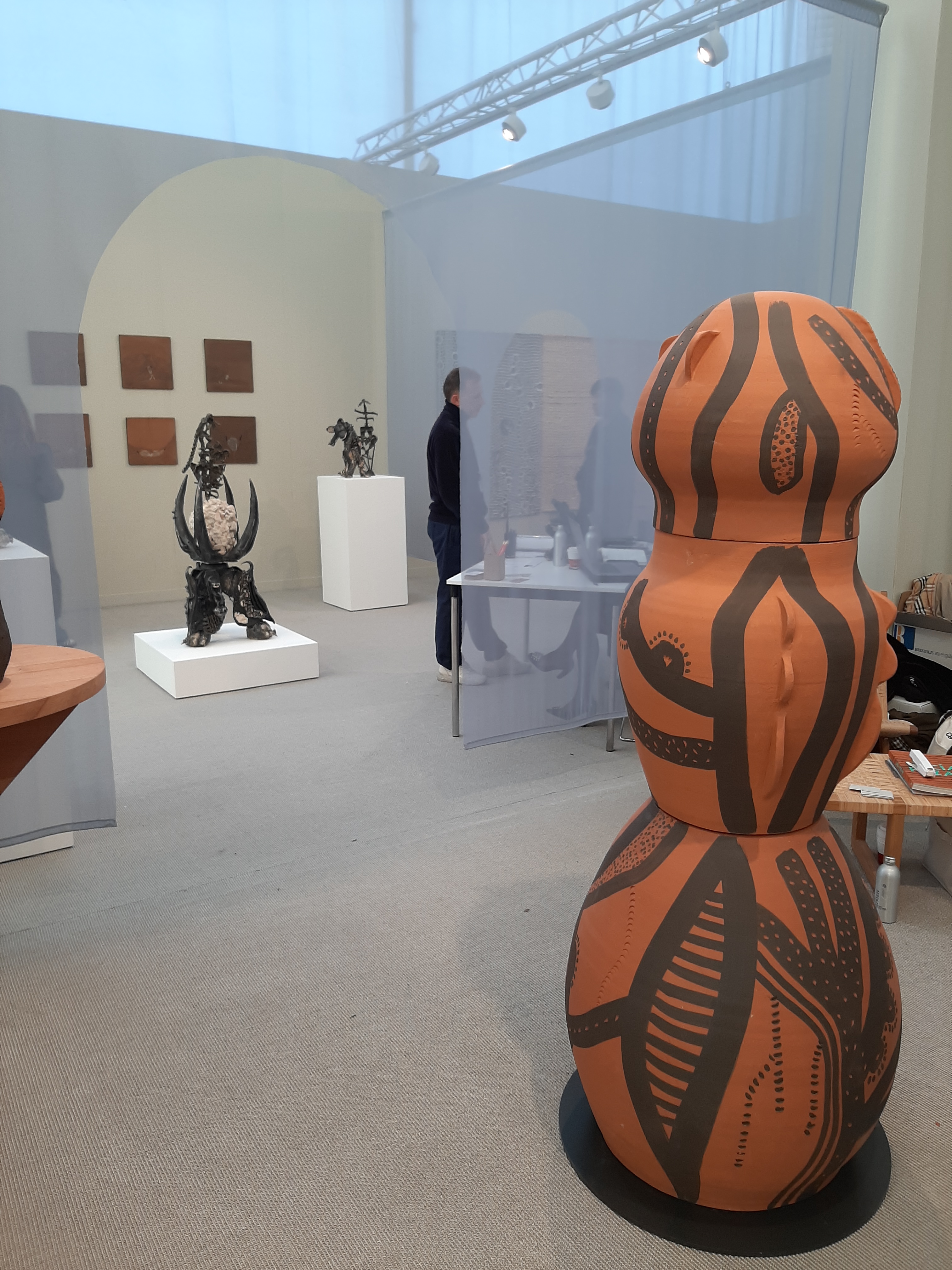
My choice among the exhibitors at Smoke was Cecilia Bruson Projects, featuring new works by Venezuelan artist Lucía Pizzani, who produced her new body of work on show both in the UK and during a residency at El Cercado, a pottery workshop on Isla de Margarita, Venezuela. Pizzani produced her South America pieces following the local pre-Hispanic ceramic traditions of the area to create intertwining narratives of natural and human histories, in contrast to the Flora Totems produced using traditional British craft techniques. The Flora Totems are modular anthropomorphic sculptures, that reflect Pizzani’s interest in exploring concepts of interconnectivity across plant and animal worlds. British traditional gardens and pottery are intertwined with the histories of flora both native and imported to South America that are referenced on the surface of the Totems through curved lines and textures with the seeds of plants such as corn and eucalyptus.
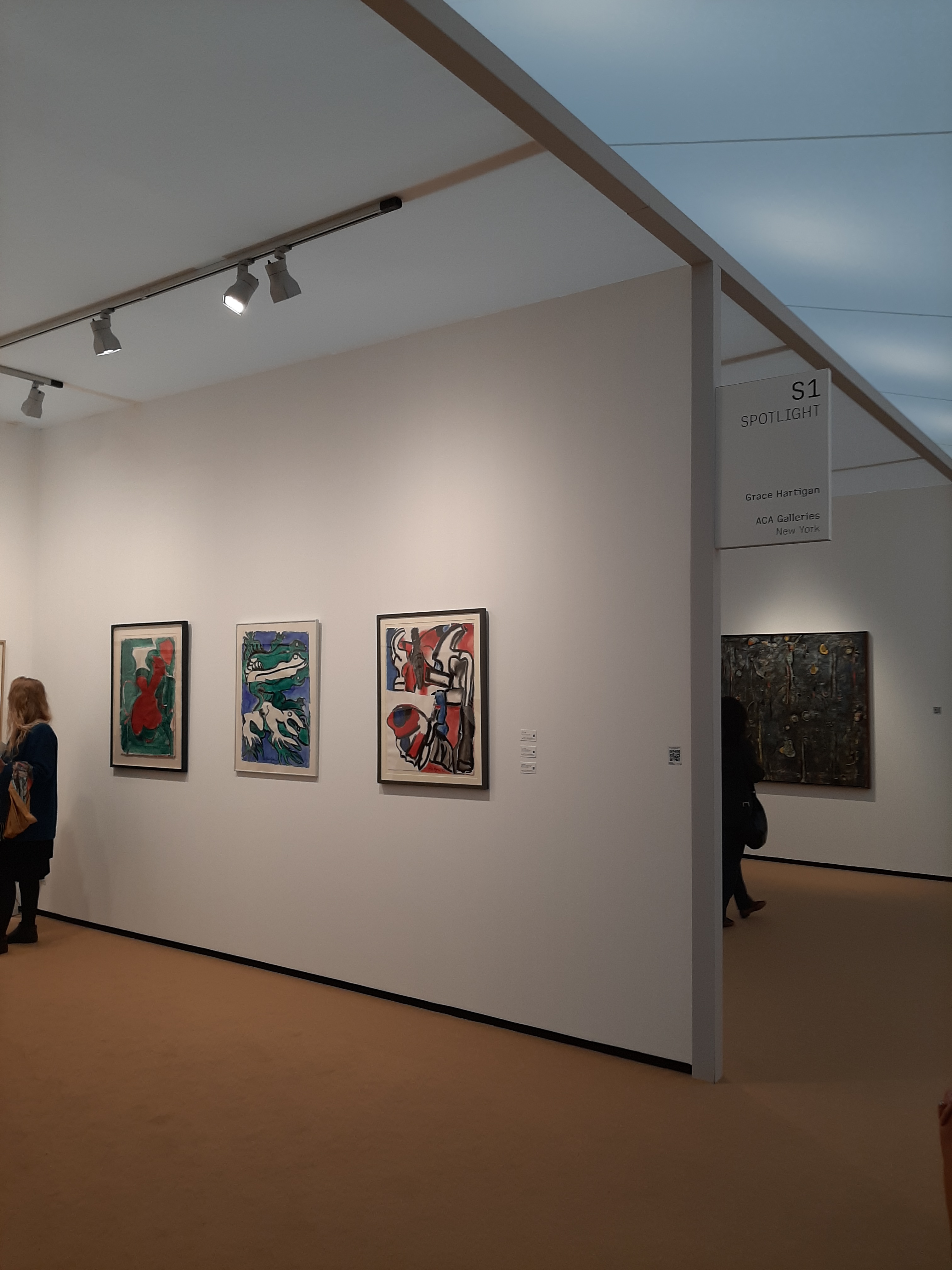
Returning curated sections this year included Artist-to-Artist, where six renowned names have selected solo presentations by new voices. At Frieze Masters art historian Sheena Wagstaff curated the Studio section for its second year, with solo booths from late-career artists that explored the creative connection between present practice in dialogue with historical art by focusing on artists’ place of making. Studio features ten solo presentations by Beatrice Caracciolo (Paula Cooper Gallery), Isabella Ducrot (Sadie Coles HQ, Galerie Gisela Capitain and Standard [Oslo]), Nathalie Du Pasquier (Pace Gallery), Shirazeh Houshiary (Lisson Gallery), Kim Yun Shin (Lehmann Maupin), Mernet Larsen (James Cohan), Thaddeus Mosley (Karma), Doris Salcedo (White Cube), Nilima Sheikh (Chemould Prescott Road) and Adriana Varejão (Victoria Miro). Also returning to Masters is Spotlight, which hosted solo presentations of radical and pioneering 20th-century artists, both lesser-known and established from the 1950s to the 1970s.
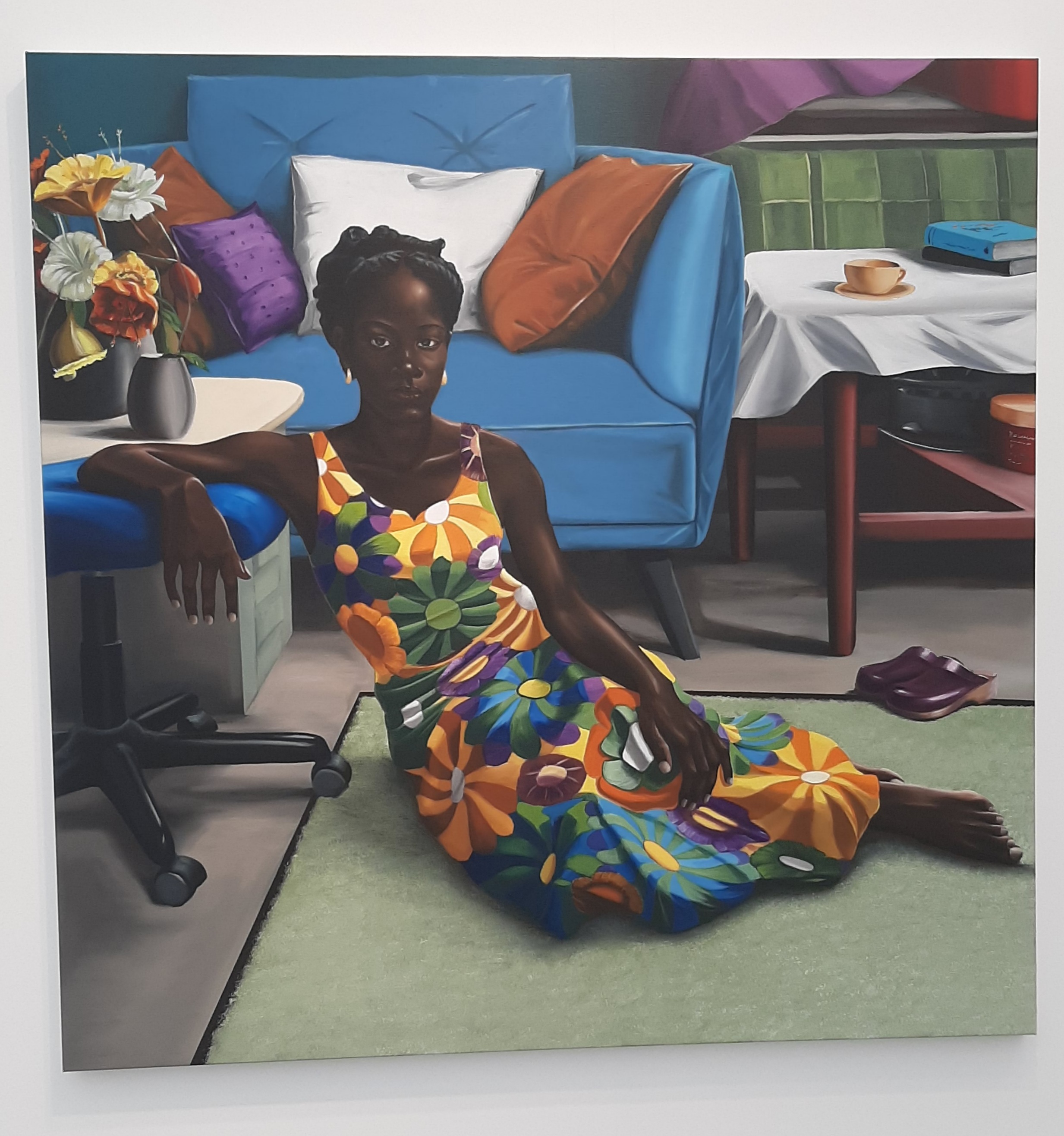
A final word on my choice at Artist to Artist: my favourite booth was Mariane Ibrahim‘s gallery, presenting a solo show of new work by Peter Uka, the Nigerian painter selected by Hurvin Anderson. The gallery showcased the artist’s signature nearly life-sized figurative oil paintings on canvas, drawing from his childhood memories of Nigeria.