Frieze Sculpture closing today at Regent’s Park
Today is the closing day of the 12th edition of Frieze Sculpture taking place at Regent’s Park and coinciding with Frieze London and Frieze Masters, which run from October 9th to 13th, also within Regent’s Park. Visitors have free access to the park to explore the artworks of 22 international artists from across five continents., selected by curator Fatoş Üstek. Frieze Sculpture comprises a carefully chosen collection of old and new, historical and contemporary; artists include Anna Boghiguian, Leonora Carrington, Theaster Gates, Frances Goodman, Yoshitomo Nara and Zanele Muholi. Following on from last year’s ‘expanded notion of sculpture’, for 2024 Üstek has selected artists whose practices blend diverse media and genres, expanding into sound, light and augmented reality. This year’s exhibition includes new commissions, works in diverse materials, including performances as in Fani Parali‘s ‘AONYX and DREPAN’, 2020. where two performers sing to each other from two steel armatures.
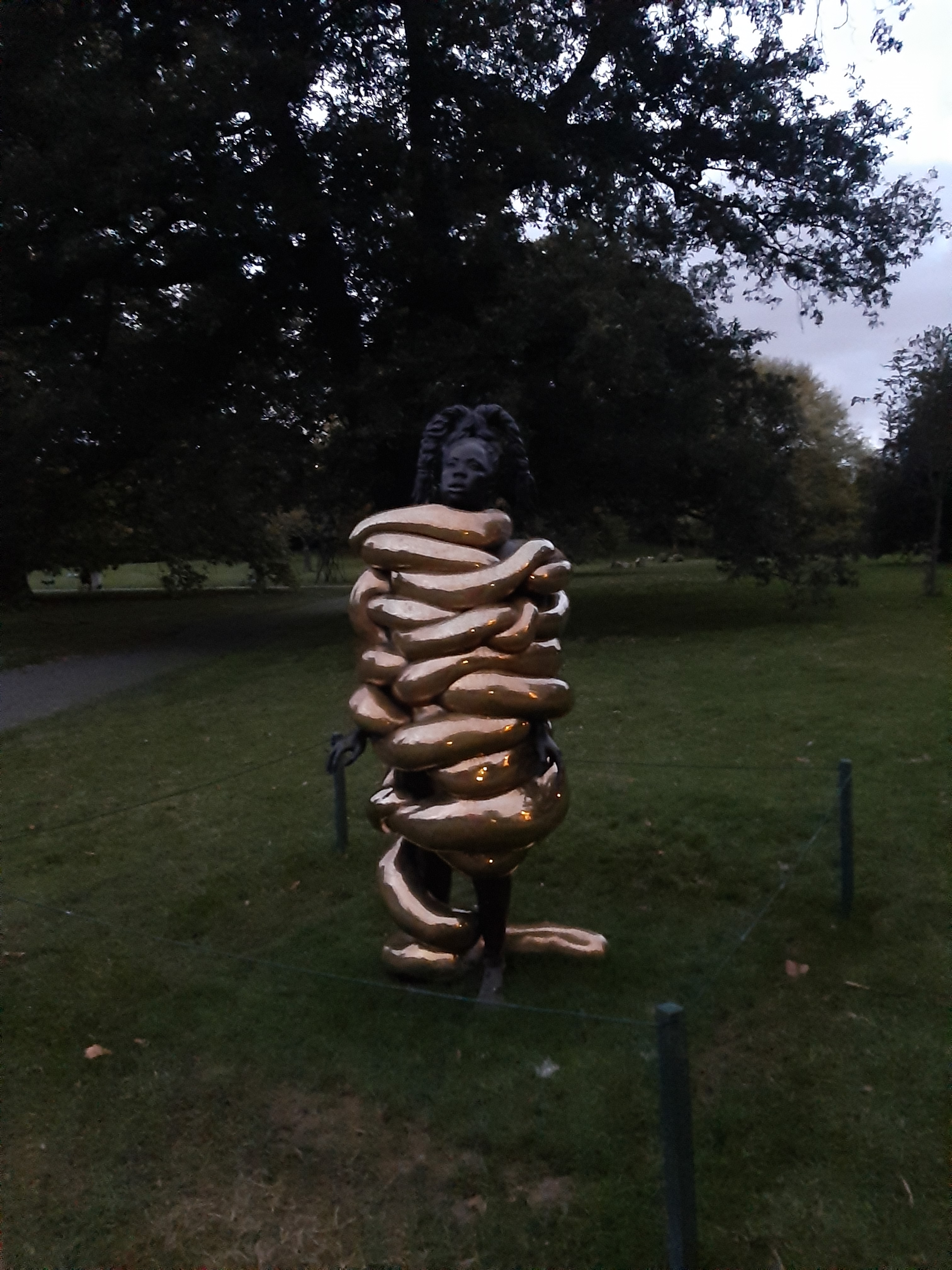
Zanele Muholi’s large-scale bronze sculpture, Bambatha I (2023), represents the artist’s body imprisoned in a monstrous coil that forms a strange, amorphous mass around her figure, or rather round what the artist calls the biologically determined ‘box’, to refer to the space encompassing their breasts and vagina. This piece is an impressive reminder of the anxiety and depression which results from uneasiness with one’s own body as well as a reference both to the artist’s struggle with fibroids and gender dysphoria.
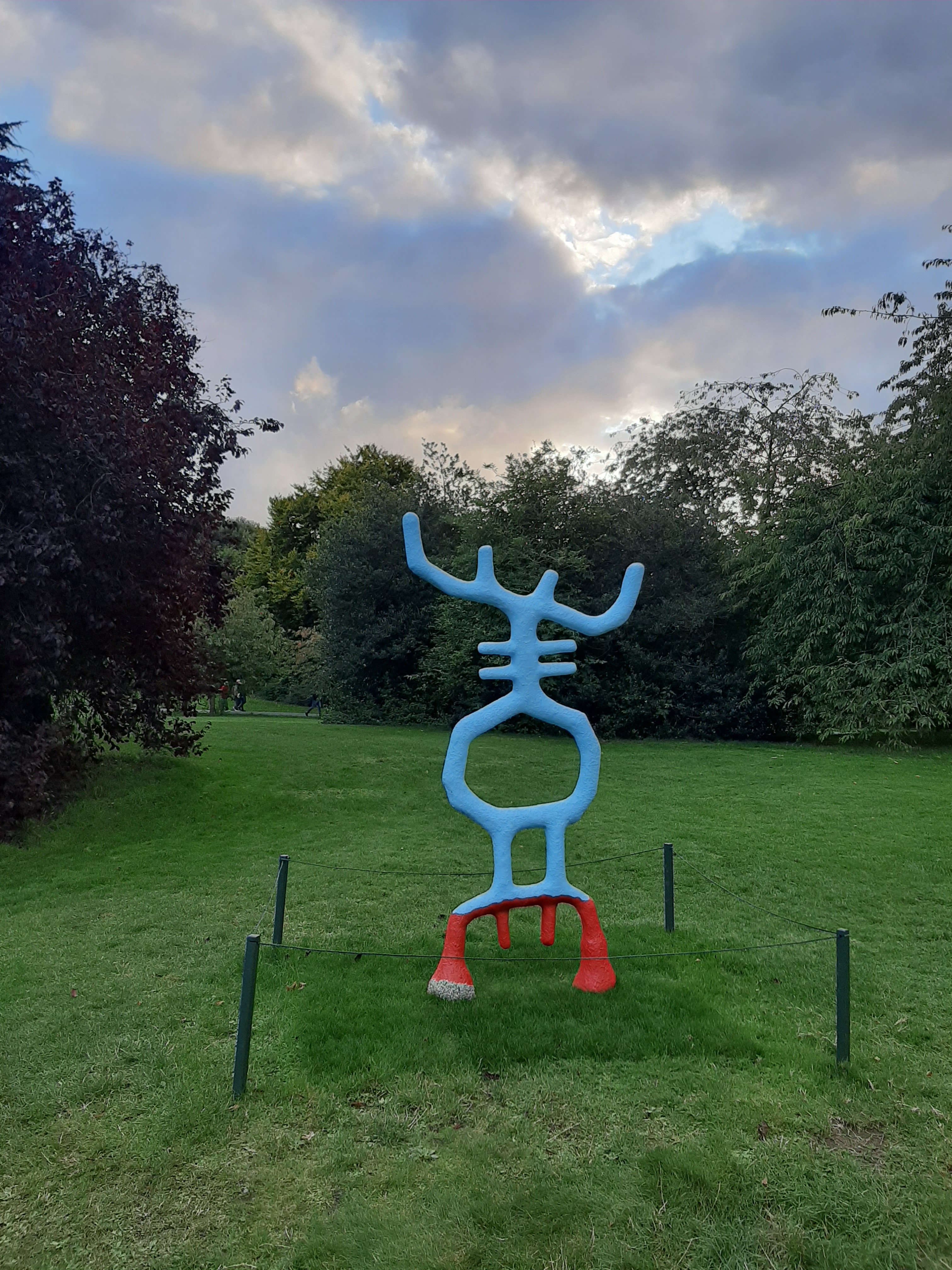
Mohamed Ahmed Ibrahim (b. 1962, Khorfakkan; lives and works in Khorfakkan, UAE) is one of the pioneers of land art from the United Arab Emirates. He makes work inspired by the mountainous desert landscape of Khor Fakkan. The Form (2024) combines archetypal shapes and vivid colours to provoke a playful sense of wonder but also deeper reflections on the world that surrounds us. His art comes from both his personal experiences and the kind of innate memory found in our DNA, which he describes as a ‘primitive urge’.
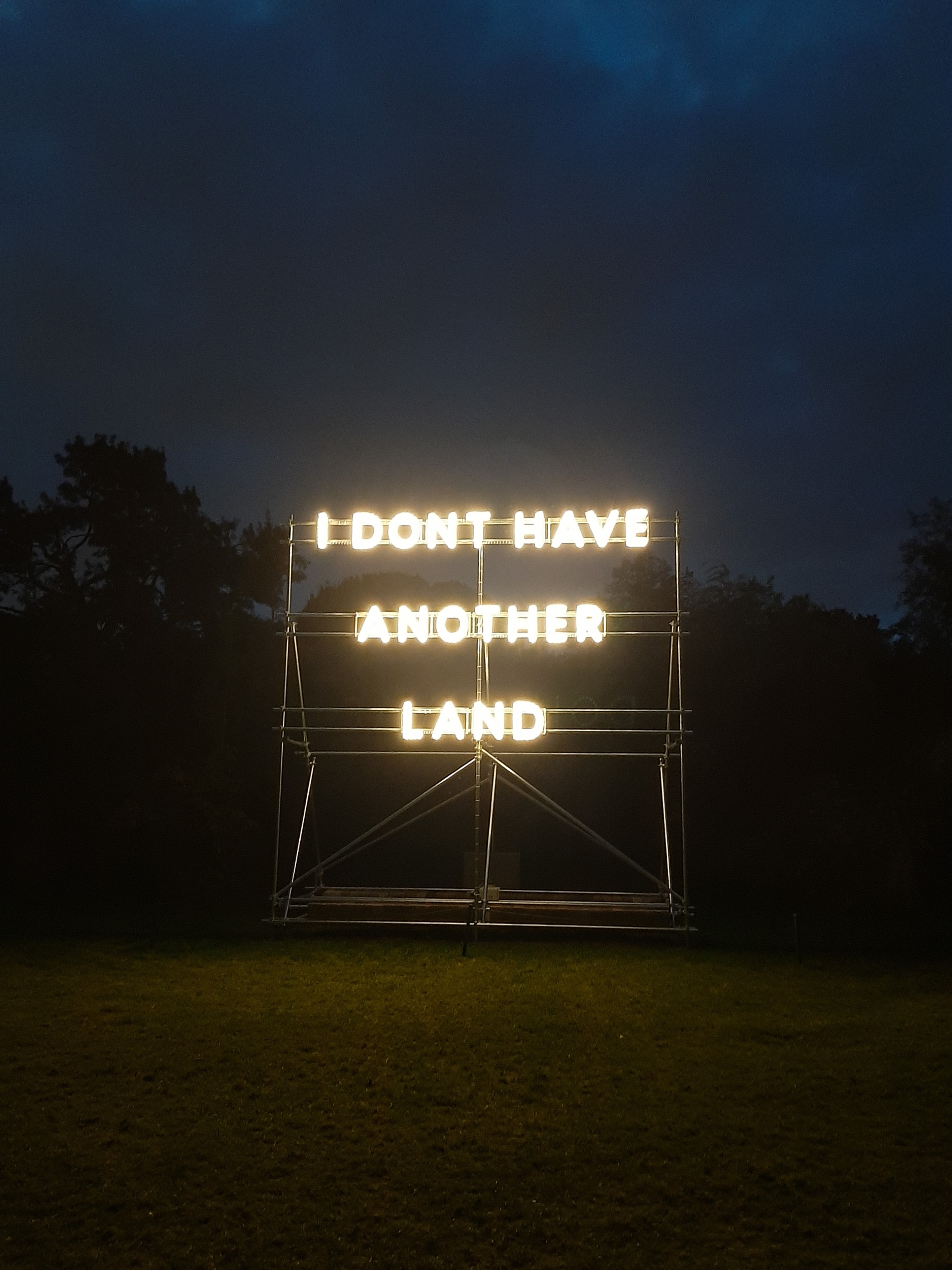
‘I Don’t Have Another Land‘ is a text work composed of lightbulbs, aluminium and scaffolding based on the use of existing phrases that come from overheard conversations, song lyrics, news reports, books and other found texts. ‘I Dont Have Another Land’ was a piece of graffiti Coley found on a wall in Jerusalem in the early 2000s. The phrases used in his text work take on new meaning in each place they’re exhibited.
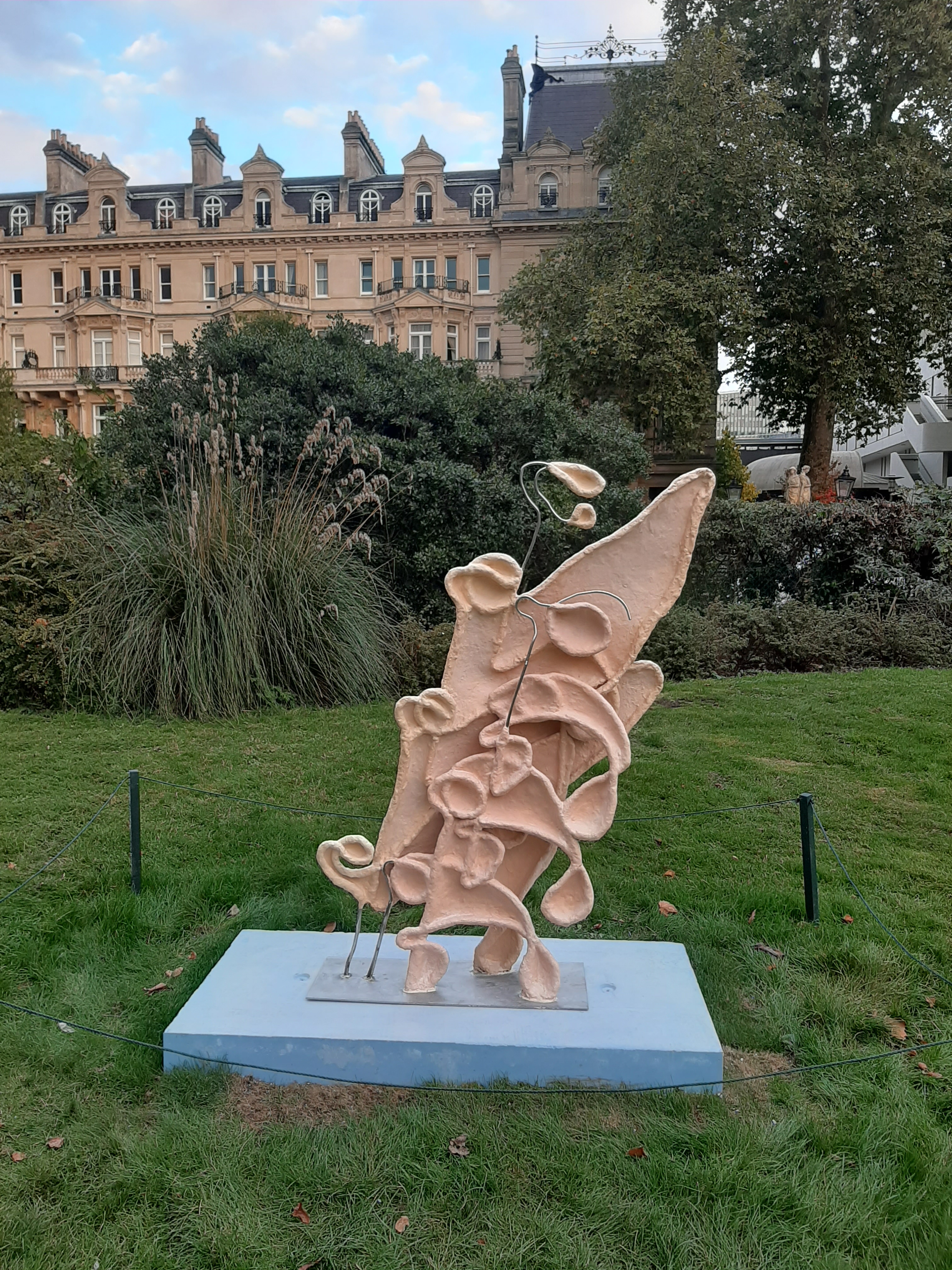
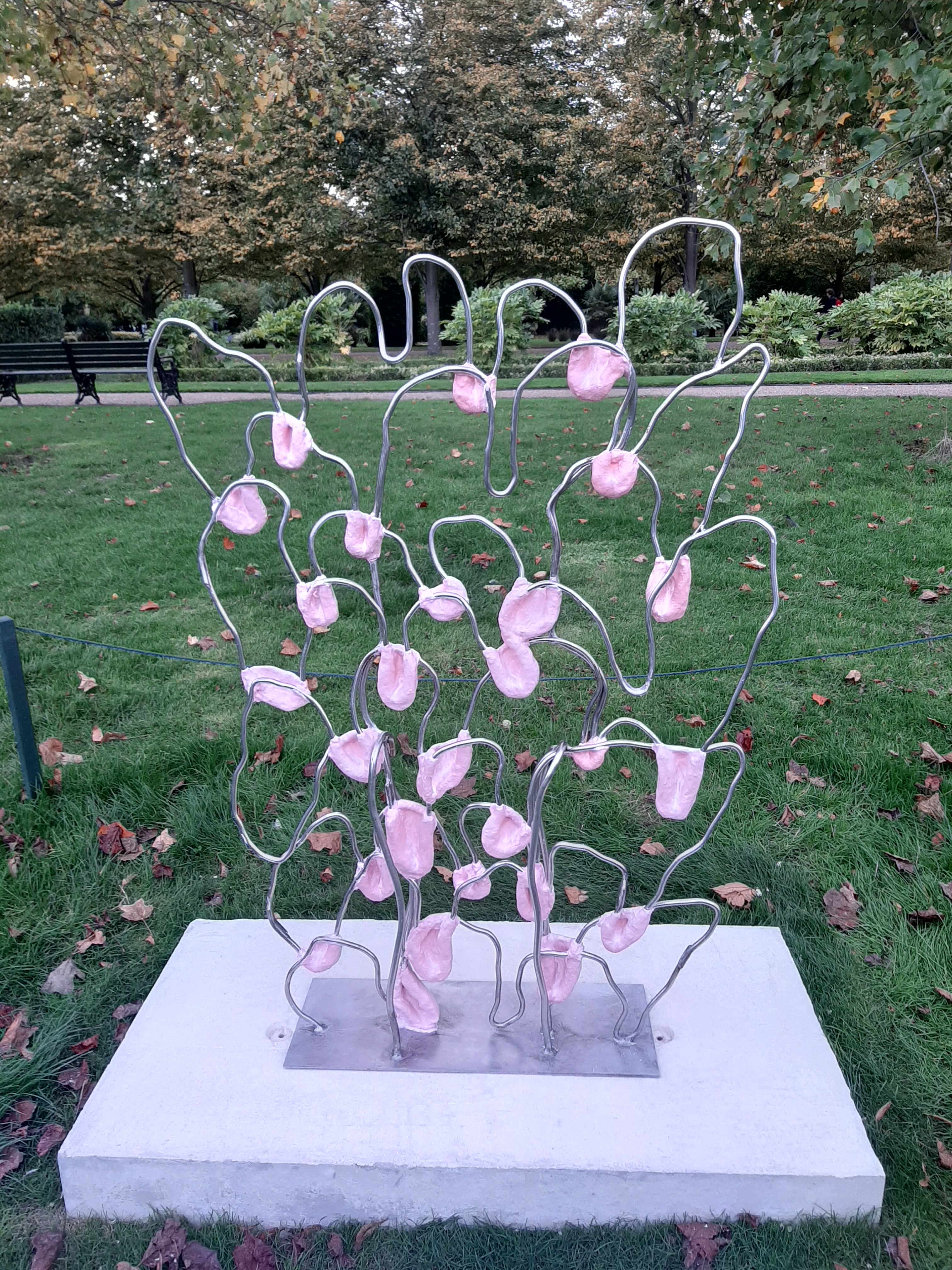
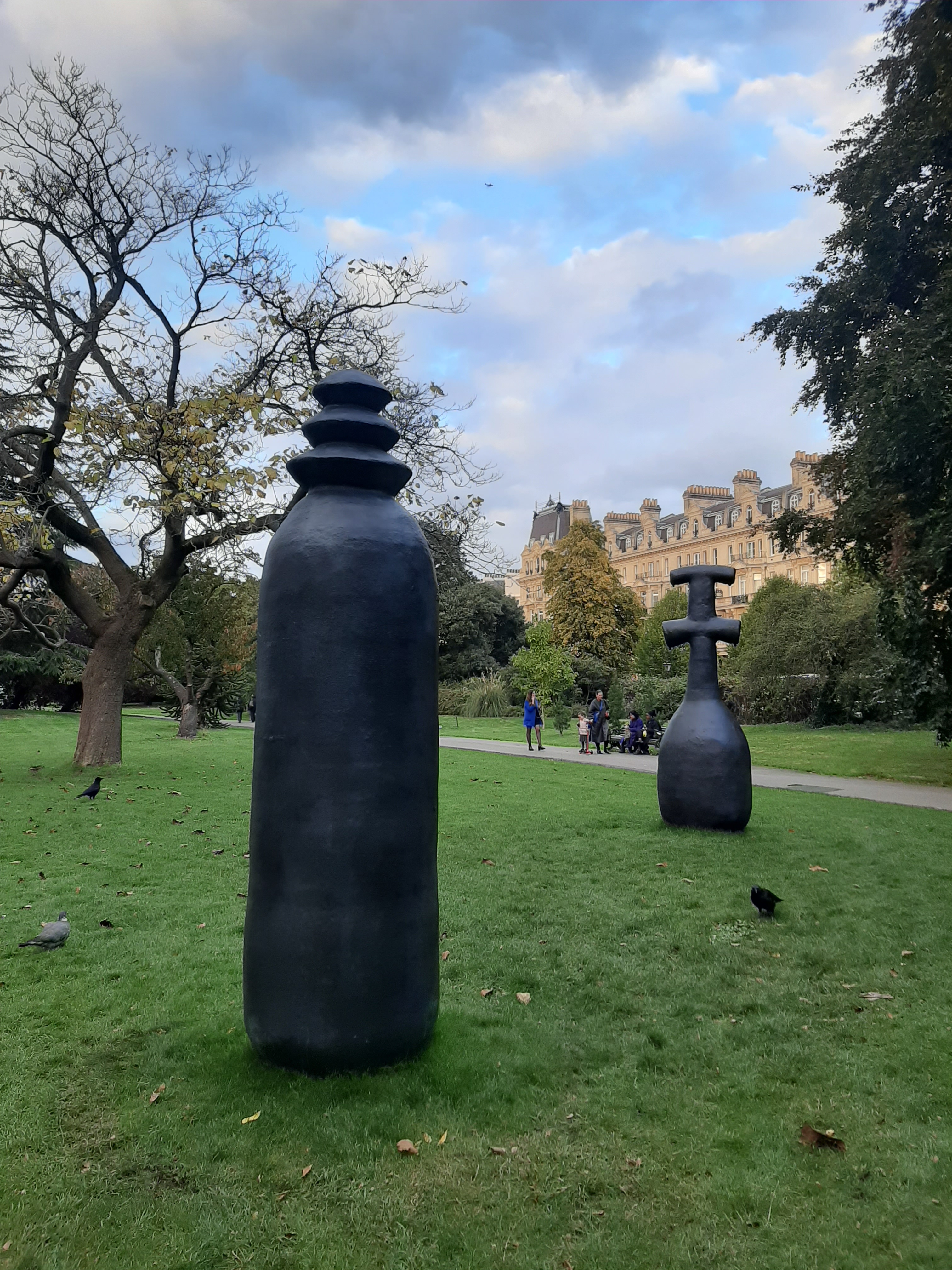
The images above represent ‘Shovel‘ and ‘Sand‘ two sculptures out of three works by Brazilian artist Juliana Cerqueira Leite featuring at Regent’s Park this year. These three sculptures are part of the series ‘Repetitive Movements That Make and Unmake the World’, that include drawings and sculptures focusing on commonplace actions, such as tying shoelaces or turning the pages of a book. The artist turns these movement sequences into precise choreographies which are captured in line drawings that resemble anatomical structures. The two repetitive actions we see translated into sculpture here are digging with a shovel and the sanding of a wall.
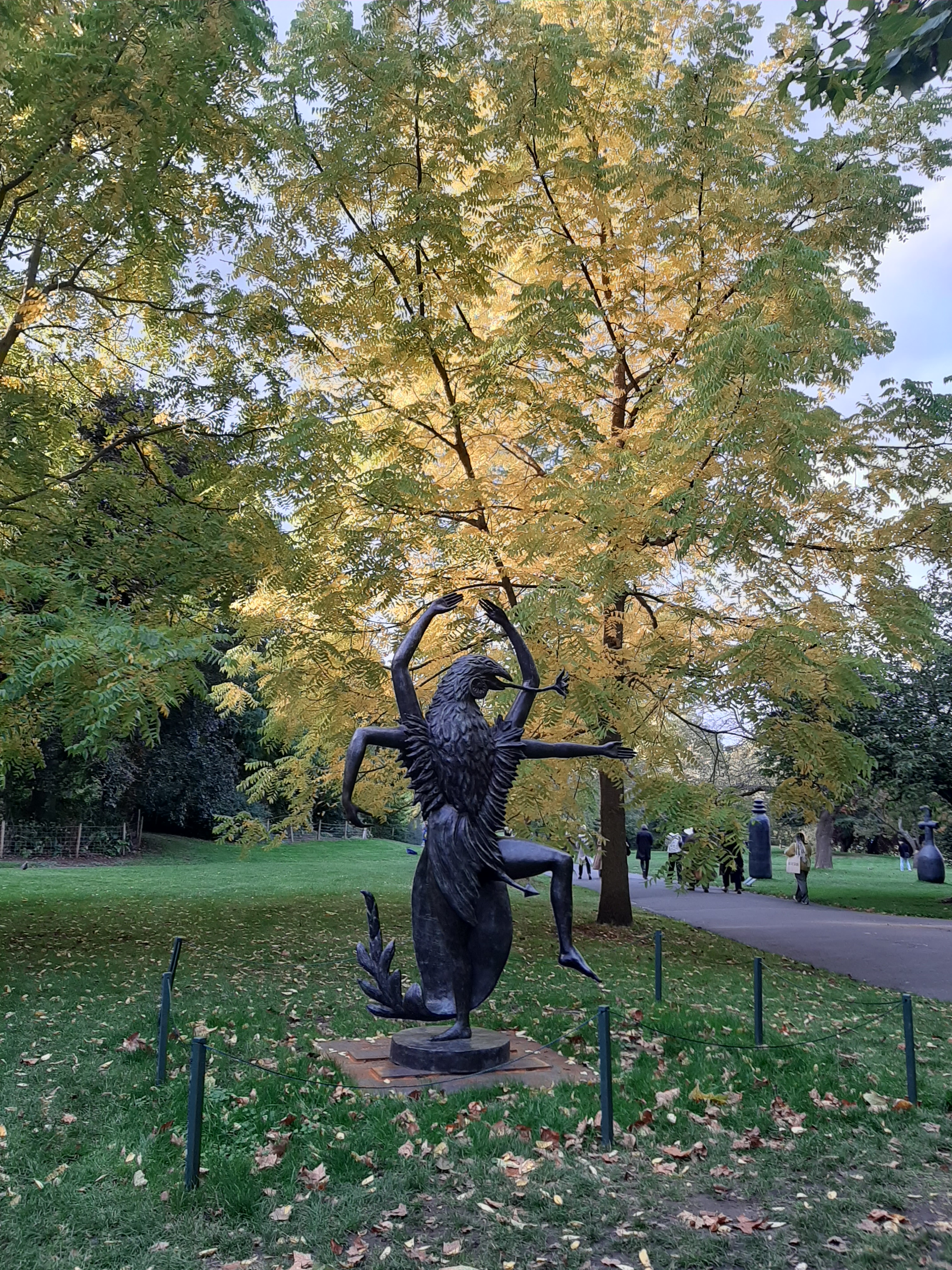
One final word about Leonora Carrington‘s The Dancer. This late-career bronze by the pioneering surrealist is a highlight of this year’s free display in The Regent’s Park. The Dancer depicts an otherworldly archetypal mythical creature in a dancing posture, deriving from one of her earlier paintings of the 1950s, specifically the 1954 painting titled Figuras Míticas, Dancer II.
