Anselm Kiefer’s Fallen Angels at Palazzo Strozzi in Florence
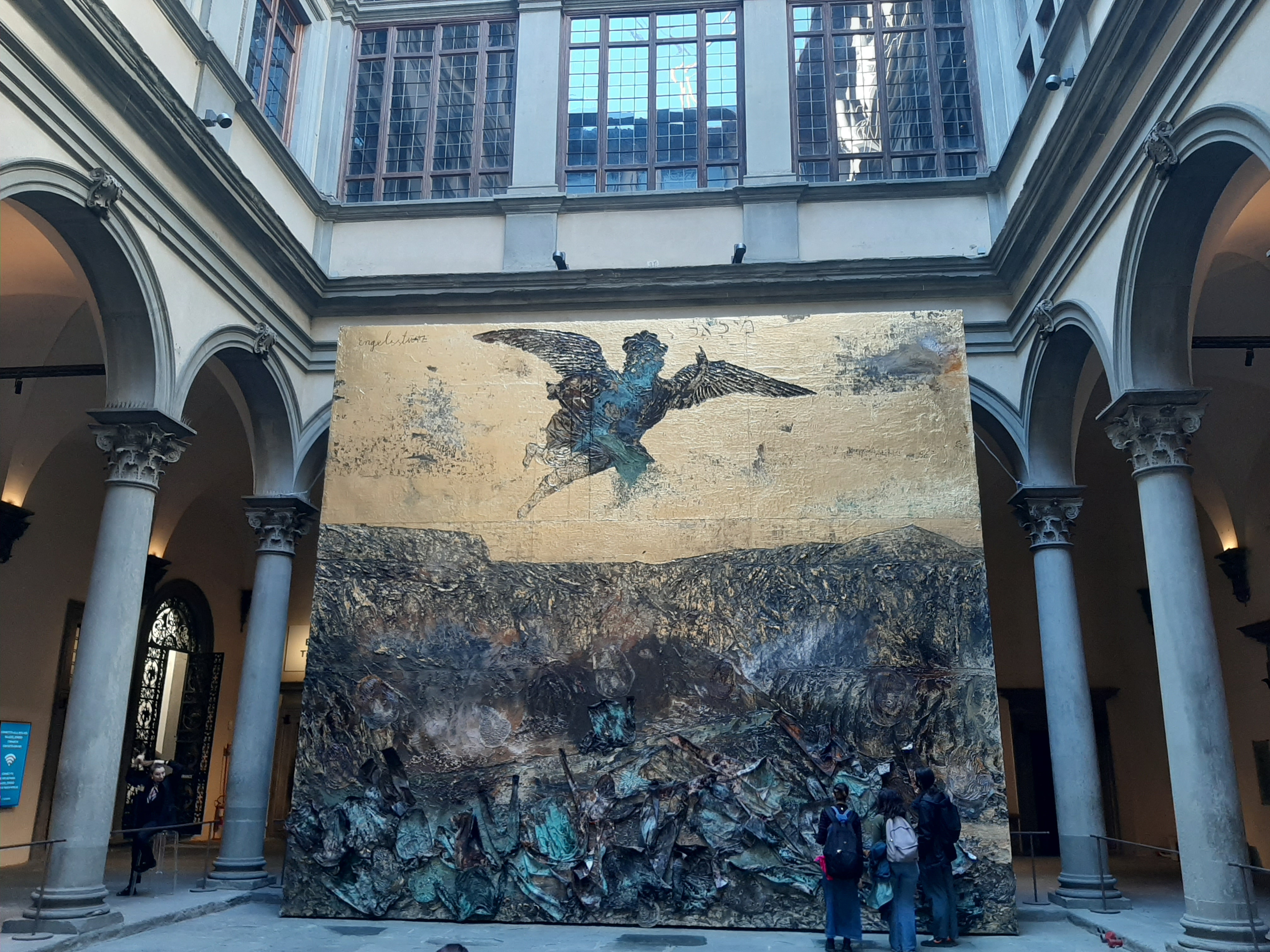
A new major show has launched at Palazzo Strozzi in Florence: Anselm Kiefer. Fallen Angels, a comprehensive retrospective of the works of one of the greatest masters of 20th and 21st century art. Historical and new works are featured throughout the Piano Nobile of the Renaissance palace, including massive and evocative paintings, sculptures, vitrines and immersive installations. In his works the German artist combines a broad variety of materials, such as seeds, plants, plaster, metal and gold leaf creating dense stratifications and layers that unveil new meanings and levels of details to the viewer’s look. The exhibition title is the theme of the Engelssturz – Fall of the Angel, the imposing painting featuring in the courtyard of Palazzo Strozzi and introducing the audience to visit experience The monumental work depicts the battle between archangel Michael and the rebel angels, a metaphor of the struggle between Good and Evil, that invites the search for meaning for all Humanity.
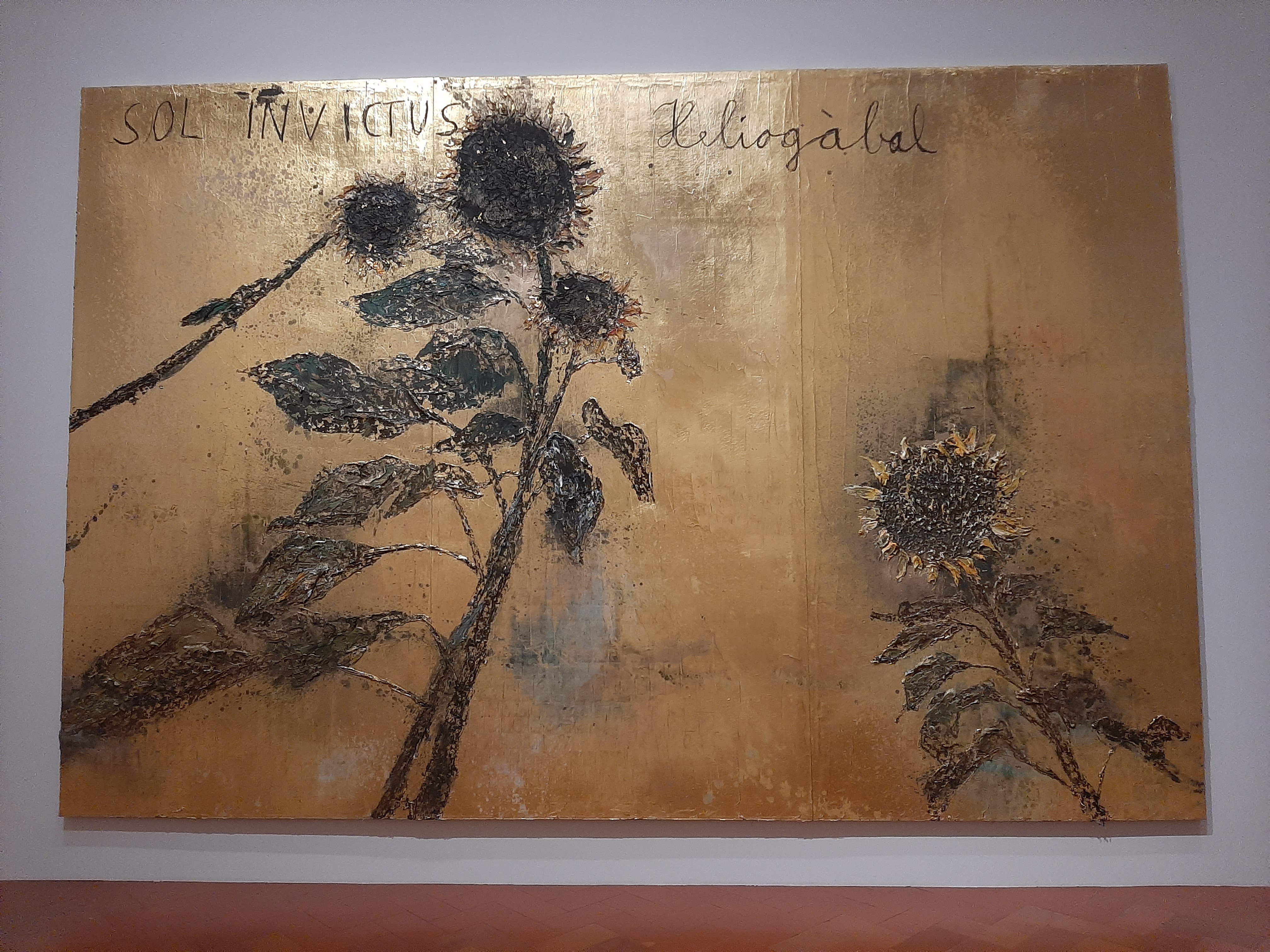
The exhibition, curated by Arturo Galansino, General Director of the Fondazione Palazzo Strozzi, explores themes of memory, myth, philosophy and poetry, unfolding a journey of introspection into the human condition and encouraging the audience to engage with the many references and meaning tackled in Kiefer’s art. This is not a straightforward exhibition to analyse and comment, however the multiplicity of historical, religious and philosophical references in his practice are beautifully showcased through an enthralling layout, so that the visit to the show becomes more and more absorbing as you move through the rooms. The exhibit’s theme of the Fallen Angels is reaffirmed in the opening room featuring a three dimensional monumental work, Luzifer, portraying the rebellious angel falling down while an enormous airplane wing emerges from the painting. The juxtaposition of the angel’s wings and those of the airplane suggests positive and negative symbols at the same time: the human desire to go beyond their limits and the tragic emblem of war and destruction. While recalling solar cults and celebrating the triumph of light over darkness in golden background paintings and woodcut of giant sunflowers such as Sol Invictus, in a large section of the exhibition Kiefer addresses one of the themes that has always permeated his research as an artist and a thinker: philosophy.
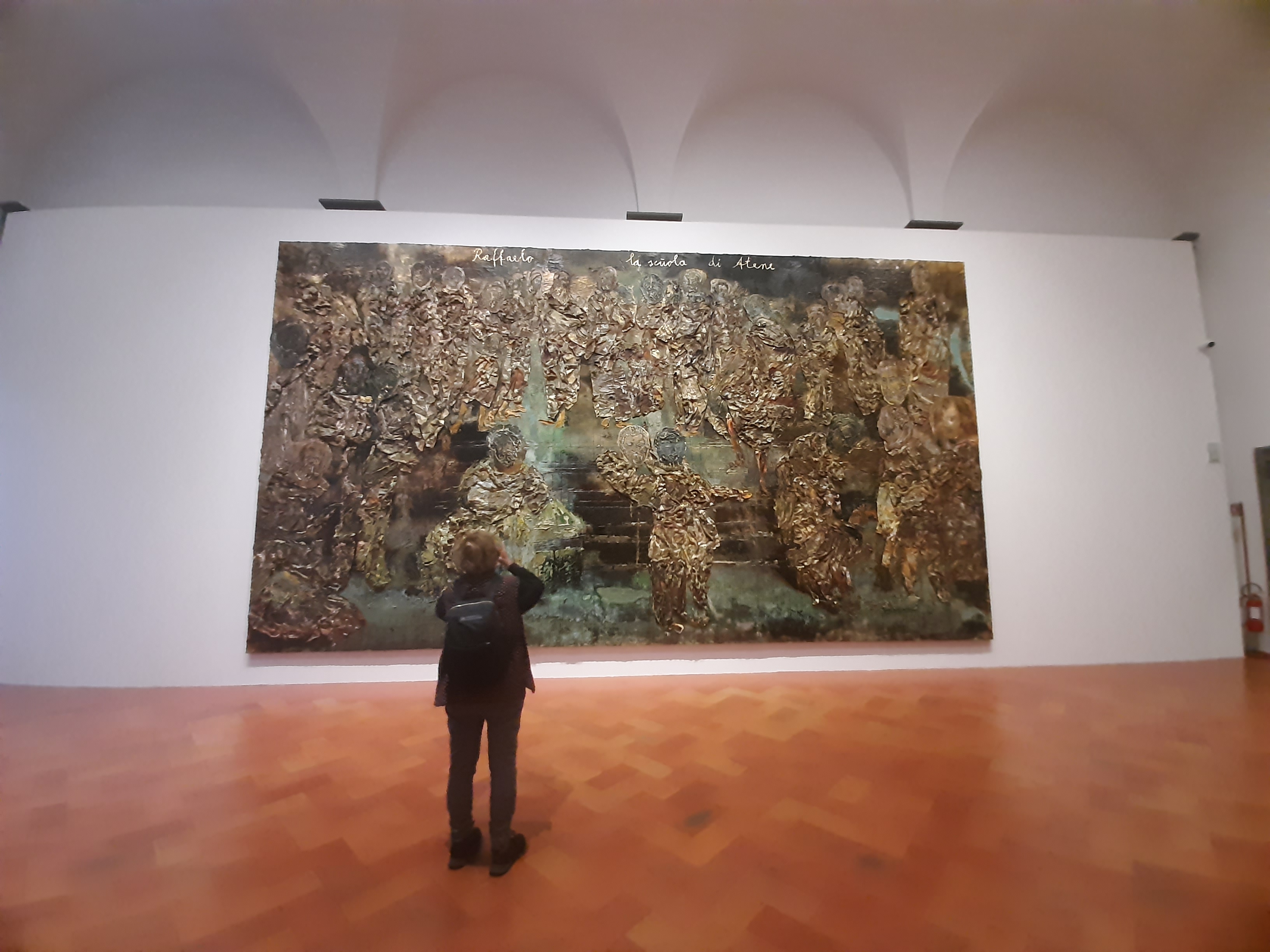
Kiefer affirms that “Painting is philosophy” and this discipline spreads through the exhibit accordingly. One of the rooms is entirely devoted to three recent large-format canvases depicting figures of ancient philosophers: Before Socrates includes Archimedes, Anaximander, Anaximenes and Parmenides, in Ave Maria the heads of pre-Socratic and post-Socratic thinkers are depicted, while La Scuola di Atene is a re-elaboration of the Raphael’s Vatican fresco where the gathering of philosophers embodies the essence of classical knowledge.
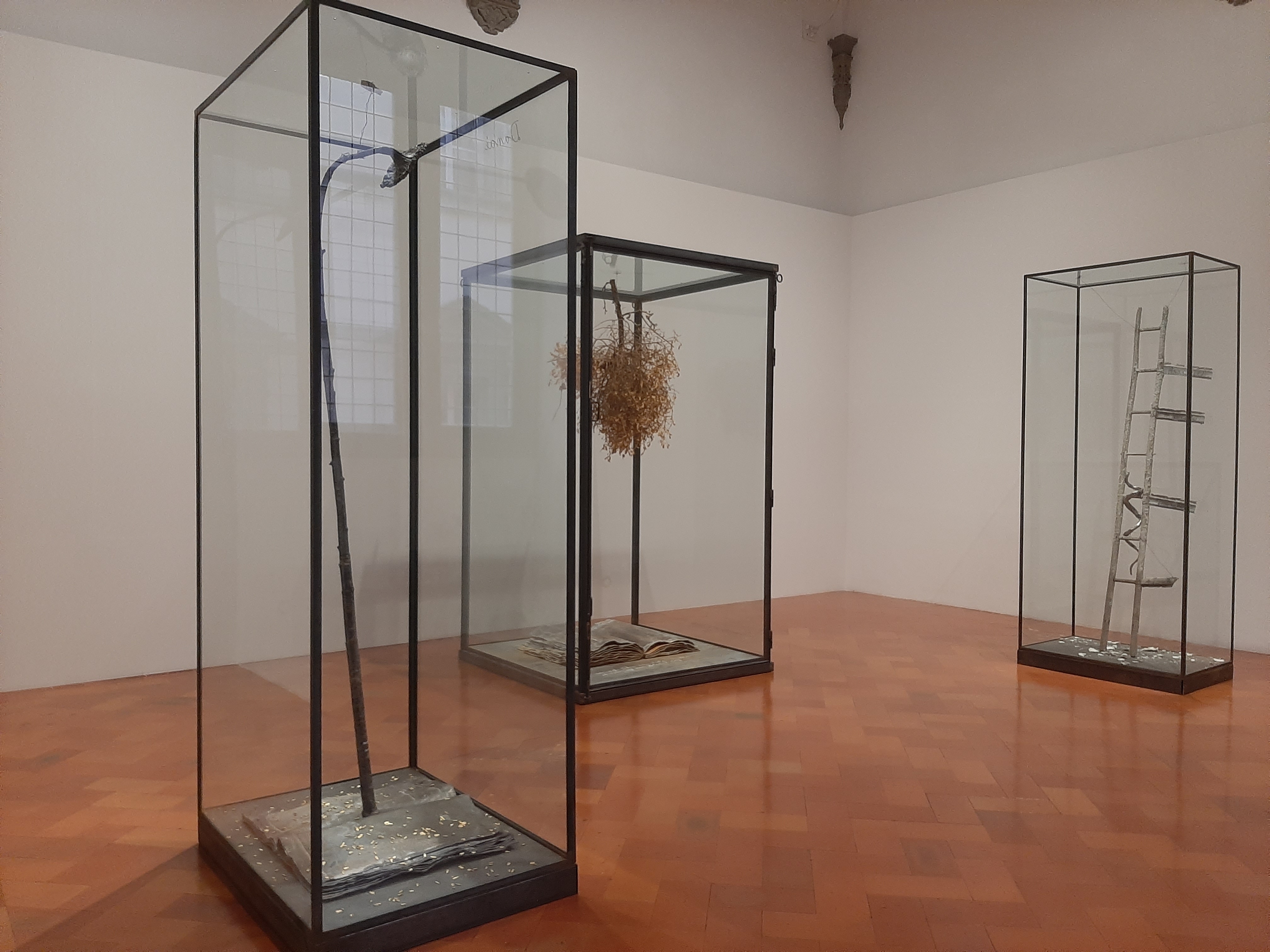
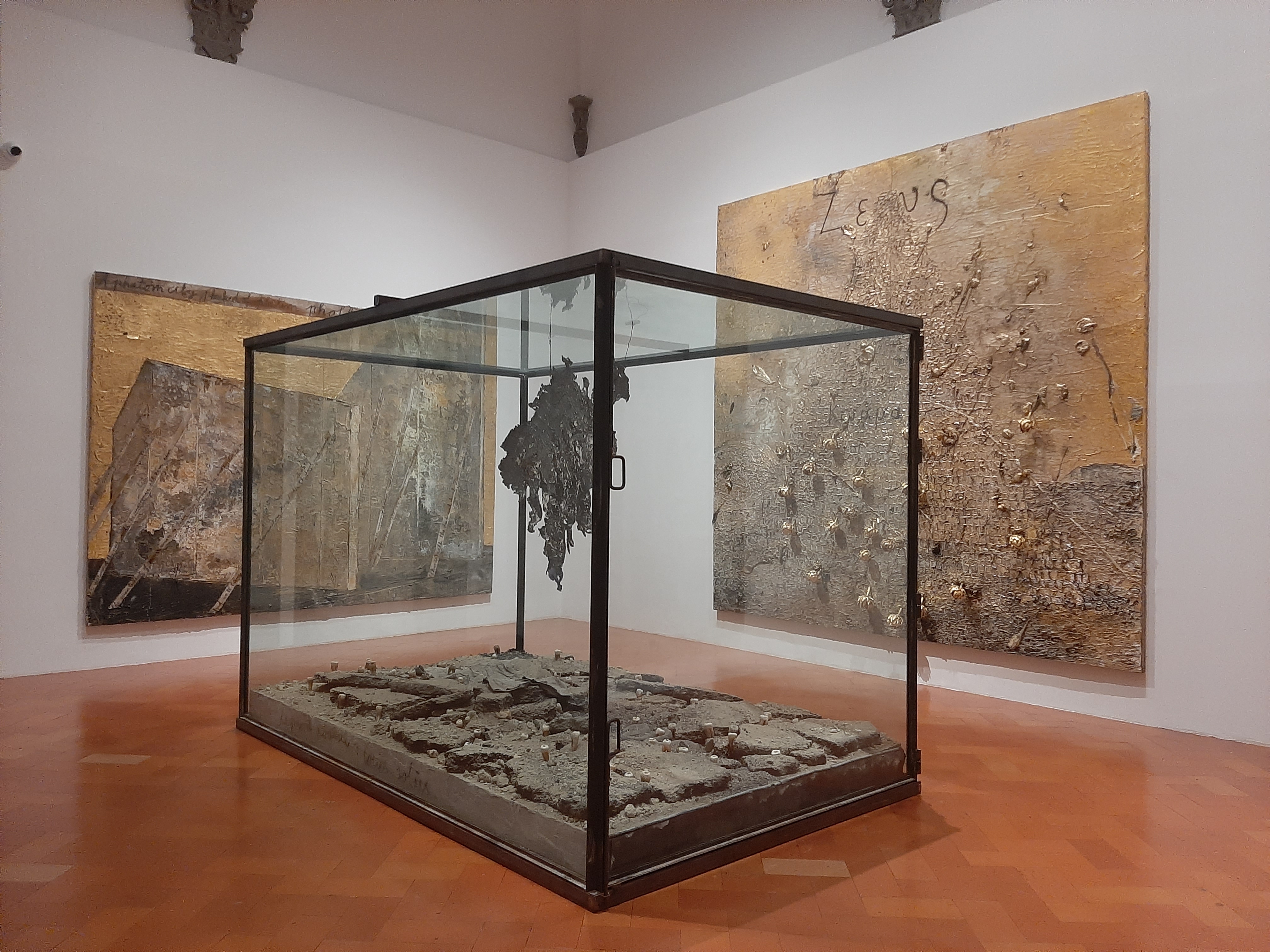
The central rooms present a selection of vitrines, representing a type of artwork which the author has been using for decades and within which he places materials, objects and inscriptions with literary, mythological or philosophical references. His material of choice is lead as it is associated with alchemical themes and processes of metamorphosis, while another key element underpinning Kiefer’s artistic practice is the Kabbalistic thought and Jewish mysticism, he refers to in En Sof, where a ladder unites earth and heaven, alluding to a process of spiritual elevation toward the divine.
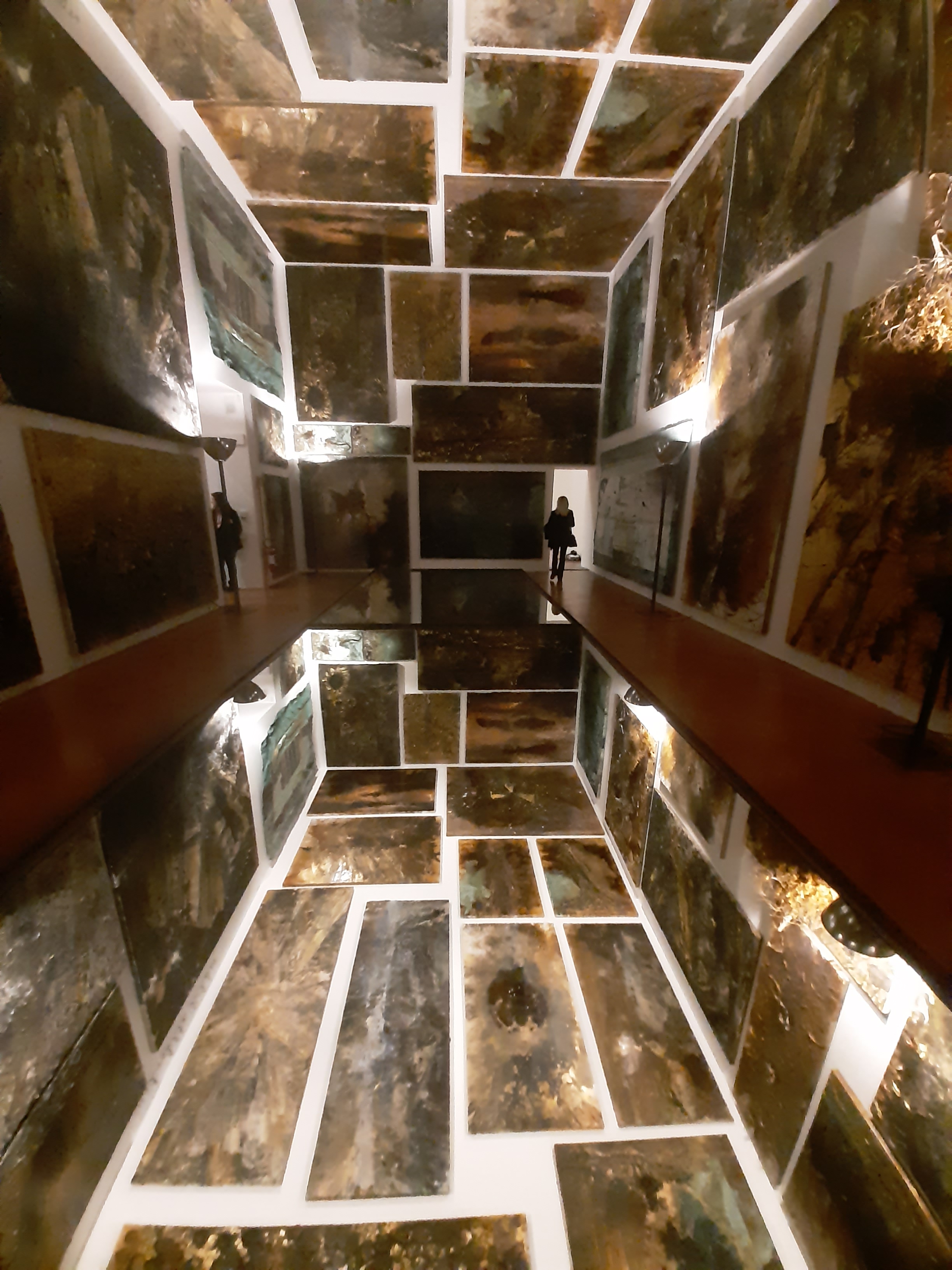
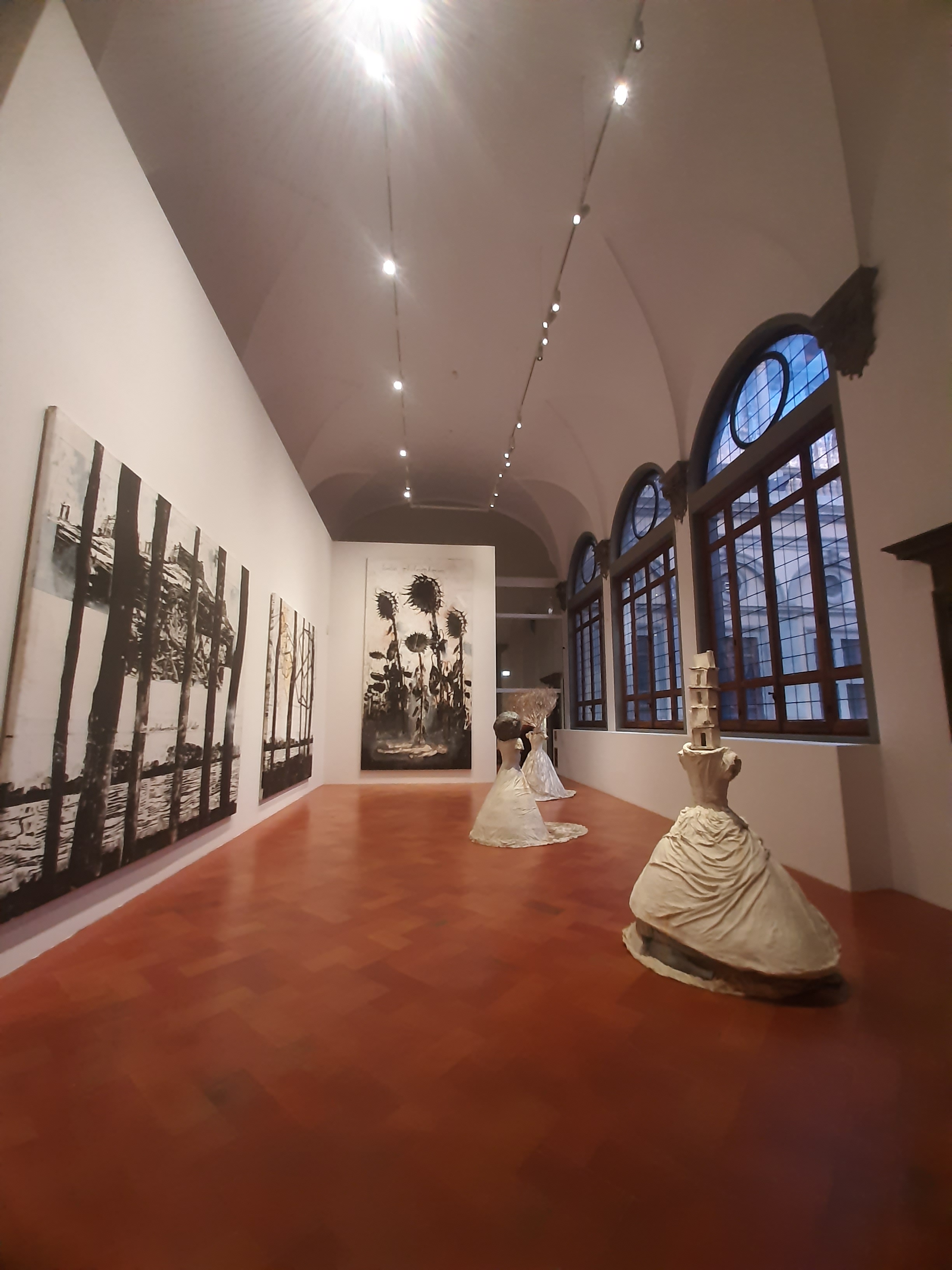
The closing rooms of the exhibit itinerary are by no means the most remarkable and intense ones: the spectacular immersive installation Verstrahlte Bilder (Irradiated Paintings) precedes a display of three large paintings and three sculpture/installations addressing the artist’s personal relationship with the river Rhine as well as mythological and philosophical themes. The last room showcases some of the seminal works from his early period, the photograph of the Occupation actions and the resulting Heroic Symbols, depicting the artist himself wearing his father’s Werhmacht uniform and giving the Nazi military salute against the background of various historical and archaeological sites. The exhibit closes on the verses of Salvatore Quasimodo’s Ed è subito sera, underpinning the importance of poetry, literature and language in Kiefer’s artistic practice: “Ognuno sta solo nel cuore della terra / Trafitto da un raggio di sole / ed è subito sera.” “Everyone stands alone at the heart of the world / pierced by a ray of sunlight / and suddenly it’s evening”.
https://www.palazzostrozzi.org
