Yan Pei-Ming’s “Painting Histories” at Palazzo Strozzi
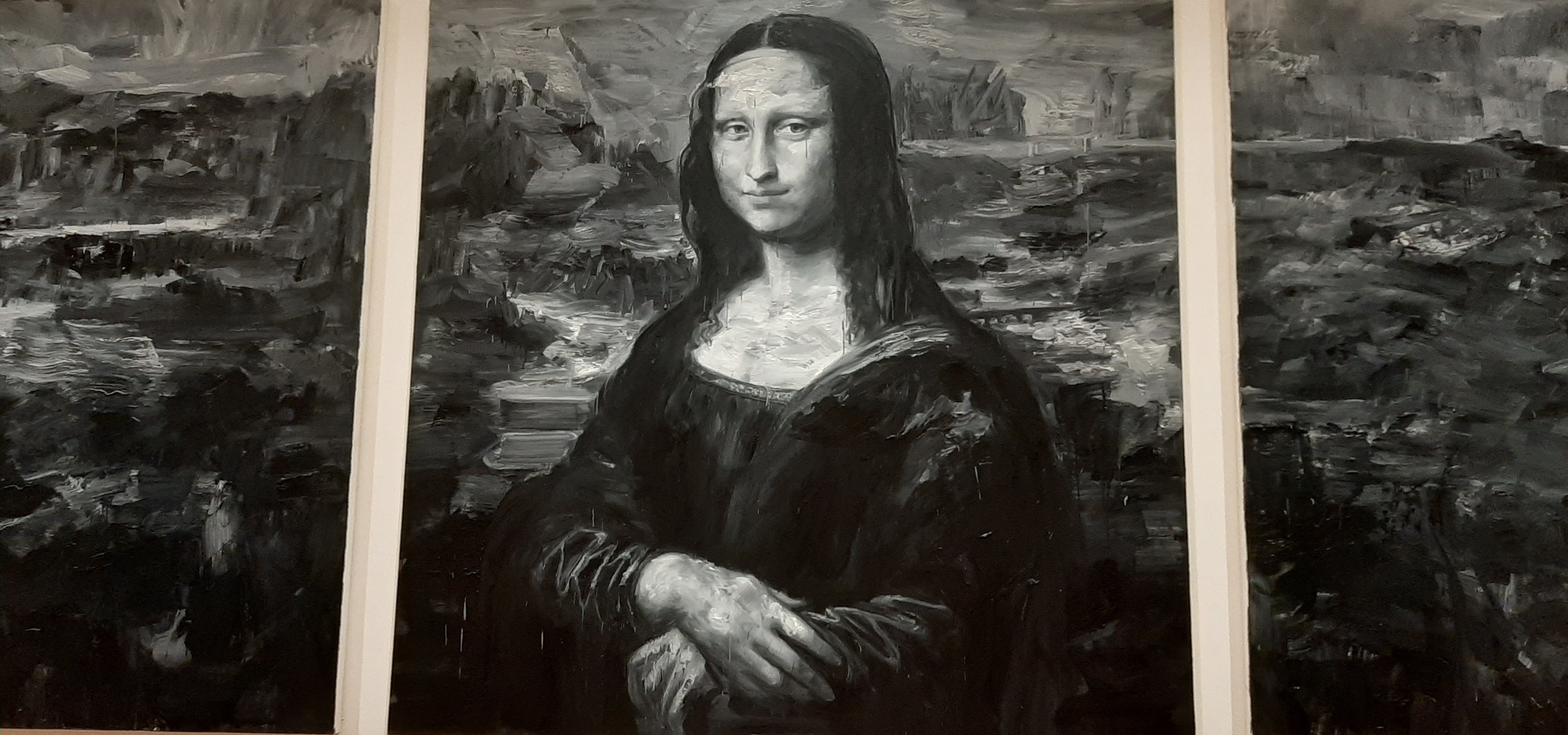
Palazzo Strozzi launches its latest show, Painting Histories, featuring the work of French-Chinese artist Yan Pei-Ming as part of their Future Art Project in partnership with the Fondazione Hillary Merkus Recordati. The exhibition is curated by the Foundation’s Director Arturo Galansino who in his introduction essay from the catalogue affirms that “With this exhibition, Palazzo Strozzi continues its mission of creating a dialogue between the past and the present, involving artists who know how to interpret our time. Yan Pei-Ming reflects on the human condition, merging diverse sources between reality and imagination, private life and public history.”
The exhibition itinerary takes us through a journey about the reflection on the relationship between history and the contemporary world, between memory and the present. exploring a wide variety of genres from portraiture, landscapes, still lives and historical painting, through to photographic images from different sources such as the artist’s own personal archive, magazine covers, film stills or celebrated works from art history. The powerful use of his two-colour palette – black and white, red and white and blue and white – together with the monumental format of the paintings urge the observer to think about the many contradictions and dangers of the upcoming AI age such as the deceitfulness of digital images, the ever more blurred boundary between private and public and the real value of authorship.
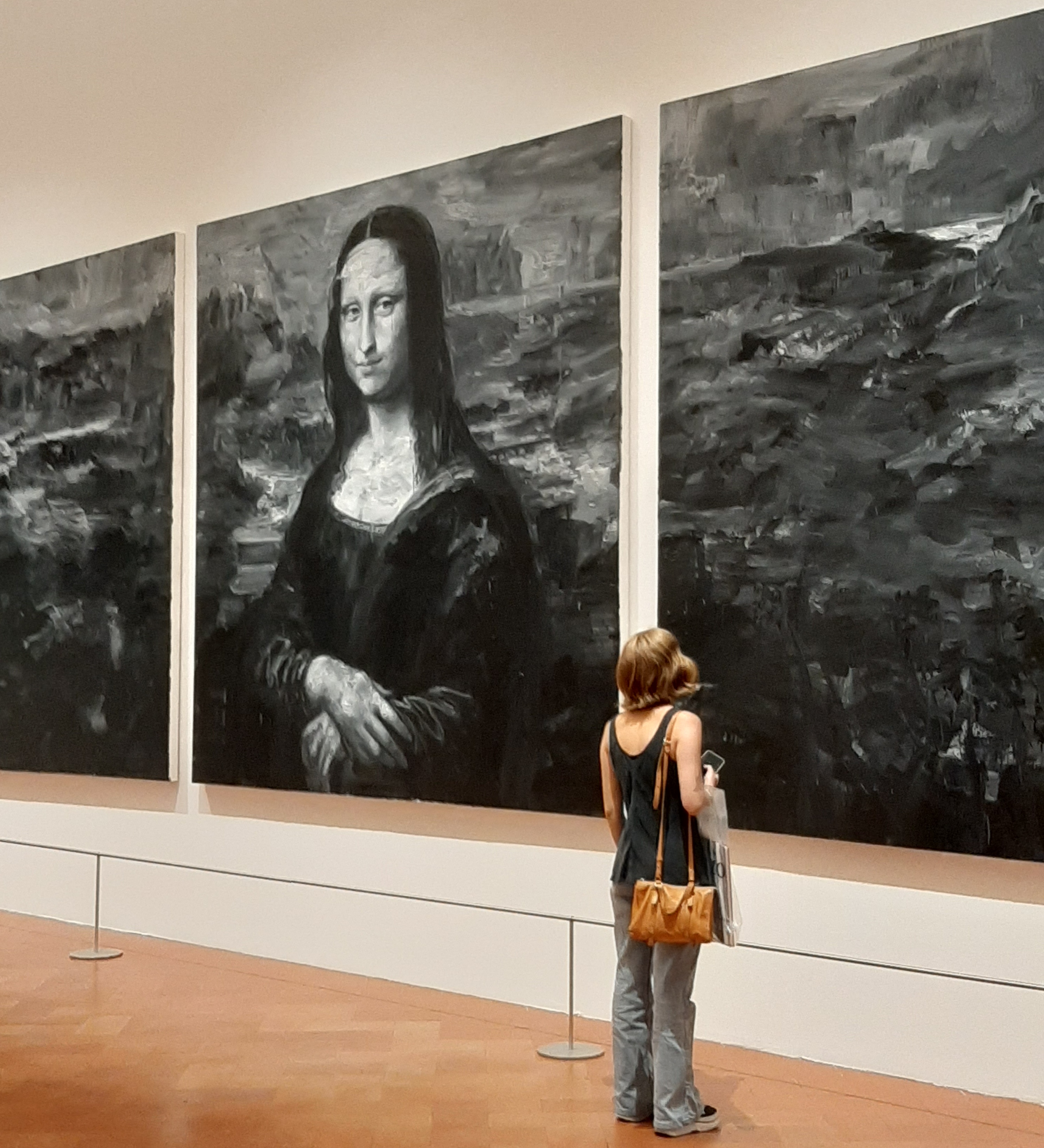
The exhibition opens with a tryptich of monumental self-portaits evoking the crucifixion, where the artist impersonates christ as well as the two thieves. A tribute to her late mother, bringing together her portrait and a deptiction of Buddah, leads the observer to the central room showing “Le Funérailles de Monna Lisa” – the Funeral of Monna Lisa – sided by two canvases, one showing a portait of his father at the hospital and the other his own funeral as a young man. Yan Pei-Ming starts reworking the most famous portrait in the world in 2009, when the Louvre invited him to confront himself with the painting and respond to it. He has prolonged it with two broad landscapes at the sides, adding a personal note to the iconic artworks and addressing the fatherson relationship, a primordial archetipe. As the artist himself recalls: “I didn’t want to produce a painting from a painting. (…) “I wanted to to give her another life, and so the most effectice way to do that was to bury her.” “Bury the myth in order to breath new life into the act of painting.”
“I’m interested in great painters; I keep finding nourishment in their work”.
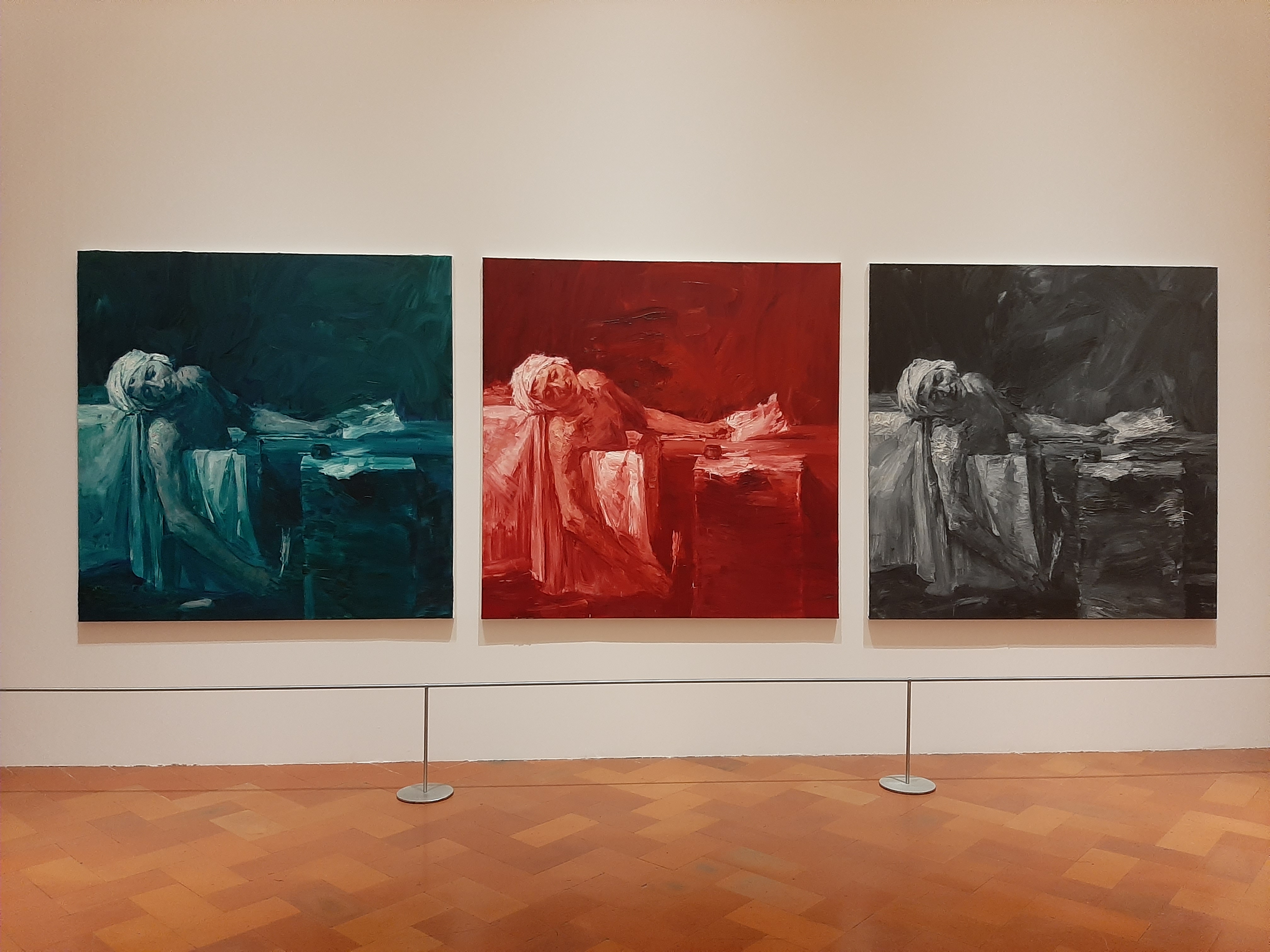
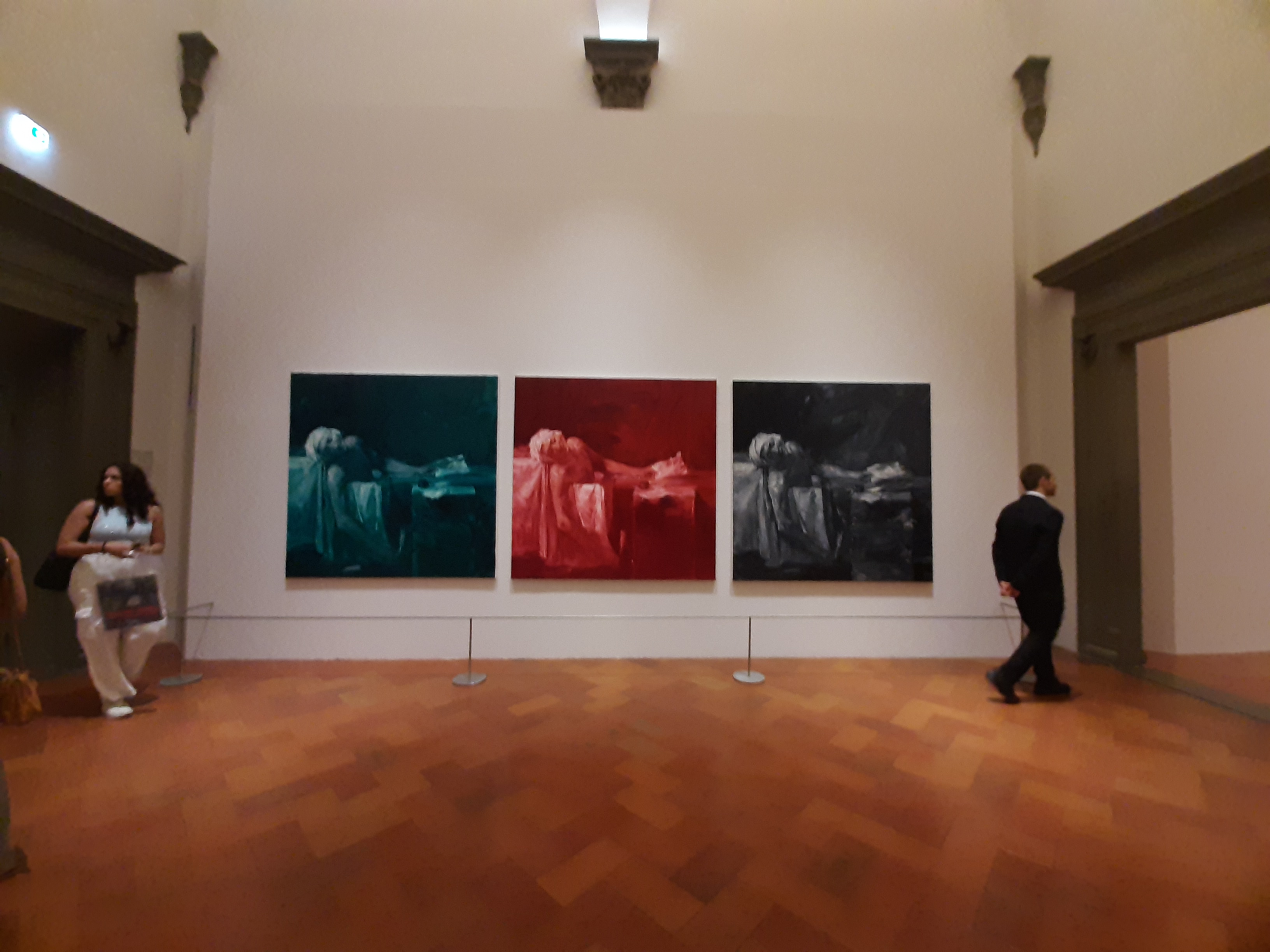
The itinerary continues through a series of re-elaboration of images produced by artists of the past, as is the case of Marat assassiné (The Death of Marat), by Jacques-Louis David, where the image is crystallized and presented in three different hues. The blood red version is placed in the centre of the tryptich, reinforcing the artist’s aim to dramatize the tableau as opposed to the cold and almost clinical original version.
The artist has also produced a blood red Exécution, après Goya (the original was painted in 1814), from which he has removed the bodies lying on the ground, turning them into flashes that light the nighttime scene, focusing on the execution: all of the depicted figures are still alive, for the artist wishes to display only “those who resist.”
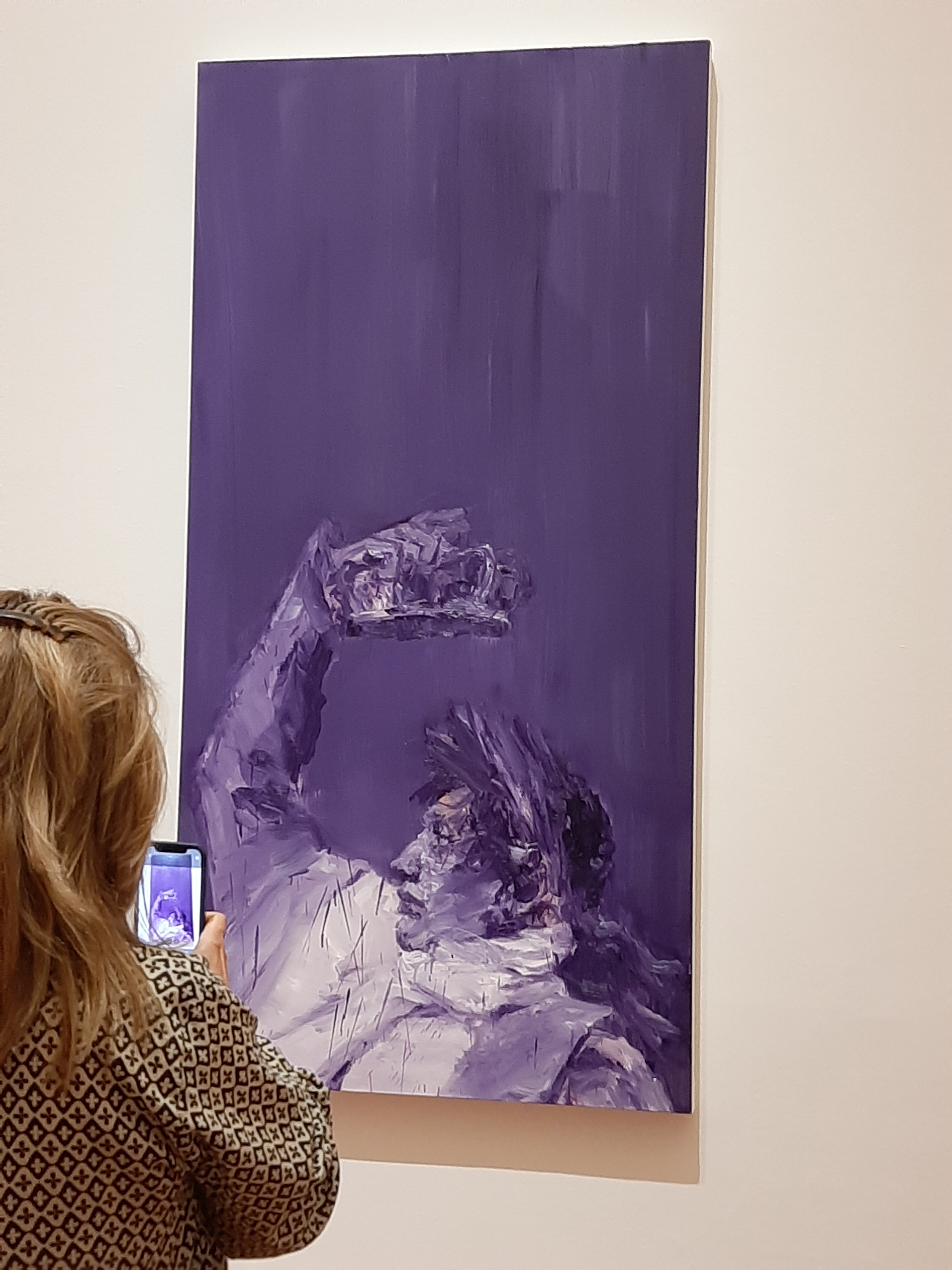
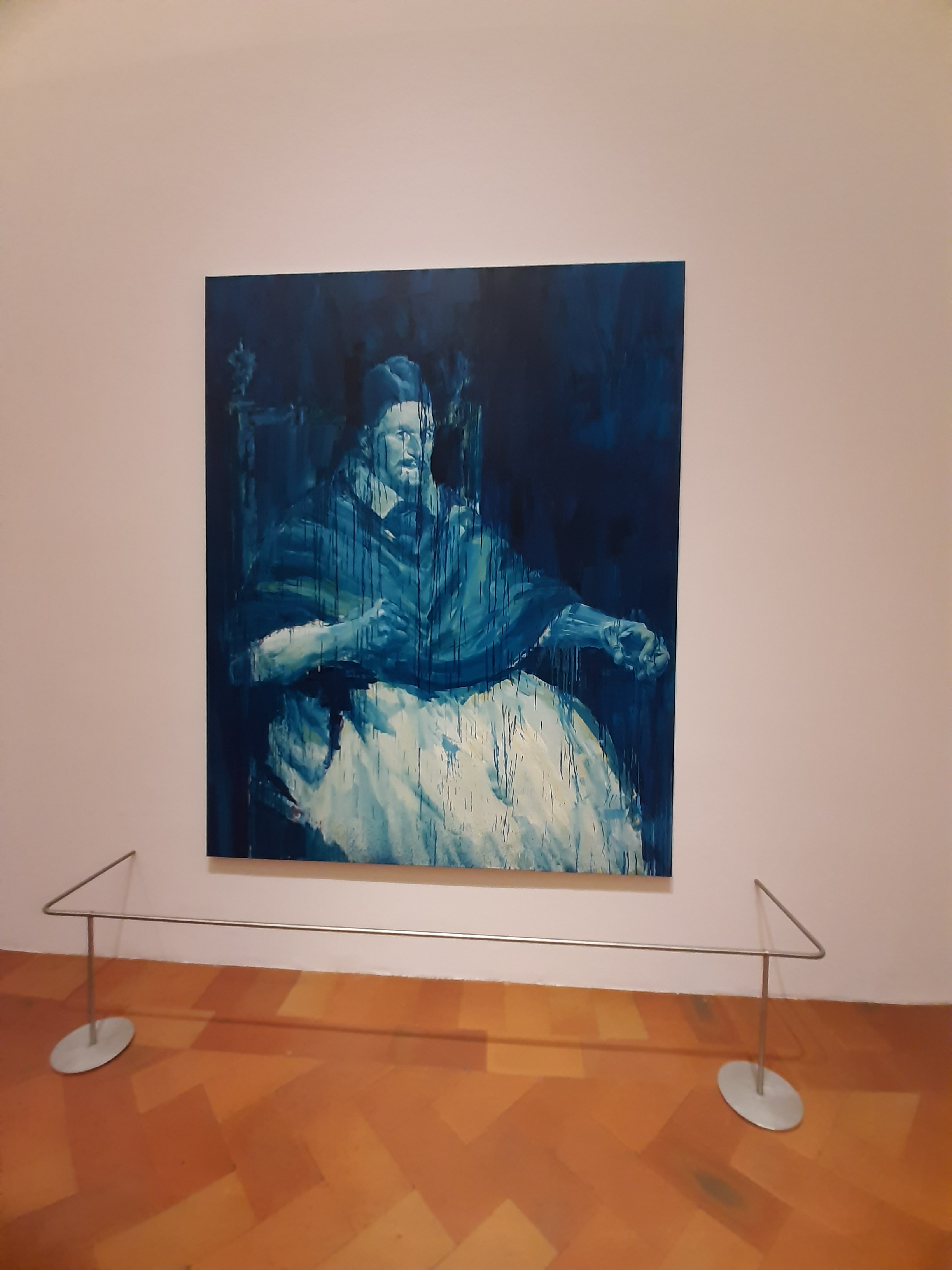
Like Bacon, Yan Pei-Ming was deeply impressed by Velázquez’s Ritratto di Innocenzo X (Portrait of Innocent X) from 1650. The figure of the pope becomes a symbol of power, its personification, much like his Napoleon, drawn from a preparatory sketch for the large canvas by David at the Louvre (1805–07), in which the Corsican crowns himself before a defeated Pope Pius VII – eliminated by Yan Pei-Ming – to manifest his rejection of papal authority. As Pope Innocent X embodies both political and religious authority, similarly these same prerogatives are combined in Napoleon, whose gesture marks a significant historical moment.
“I assume I am both a Chinese and a European artist, but I am first of all an artist”
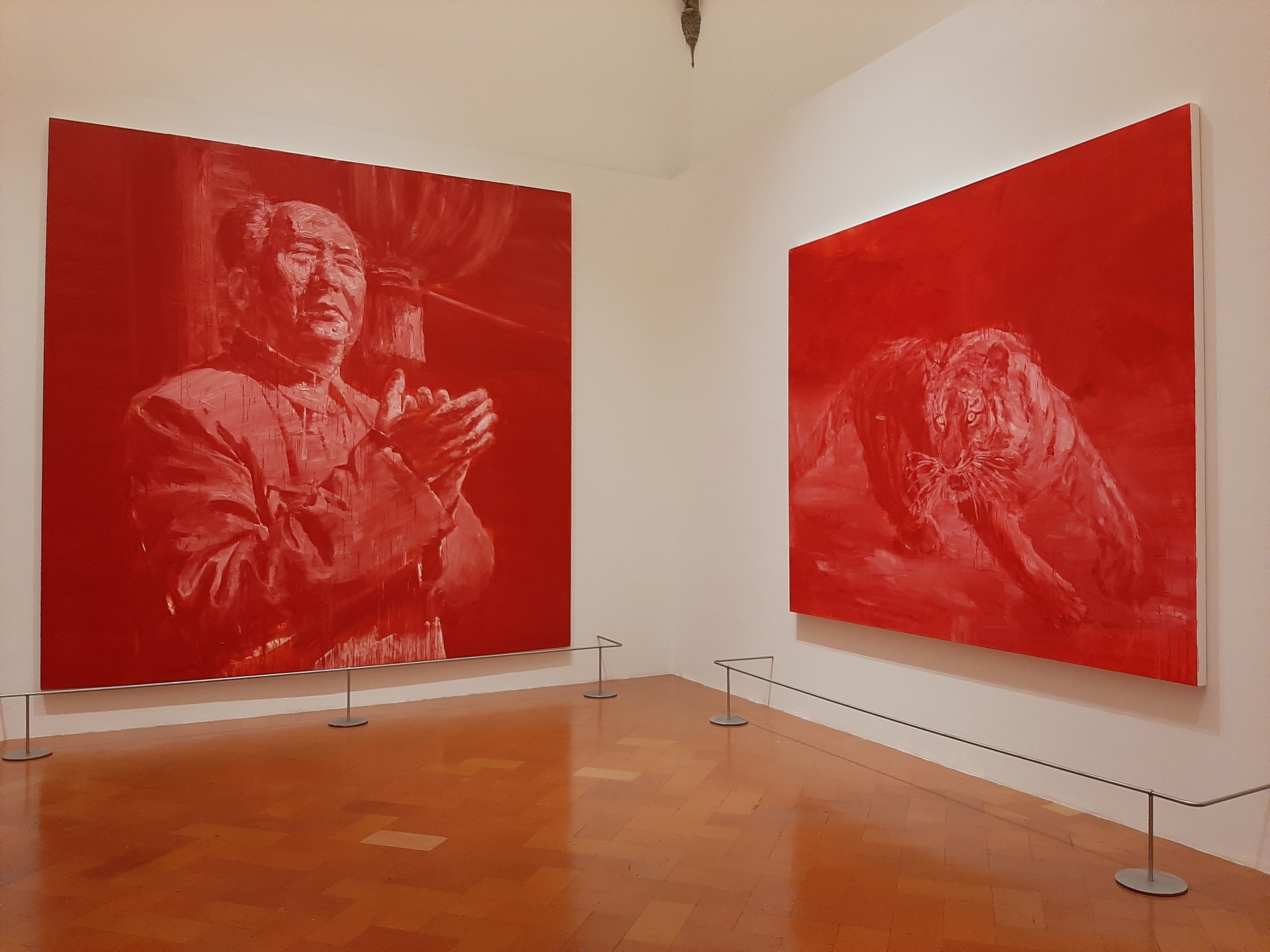
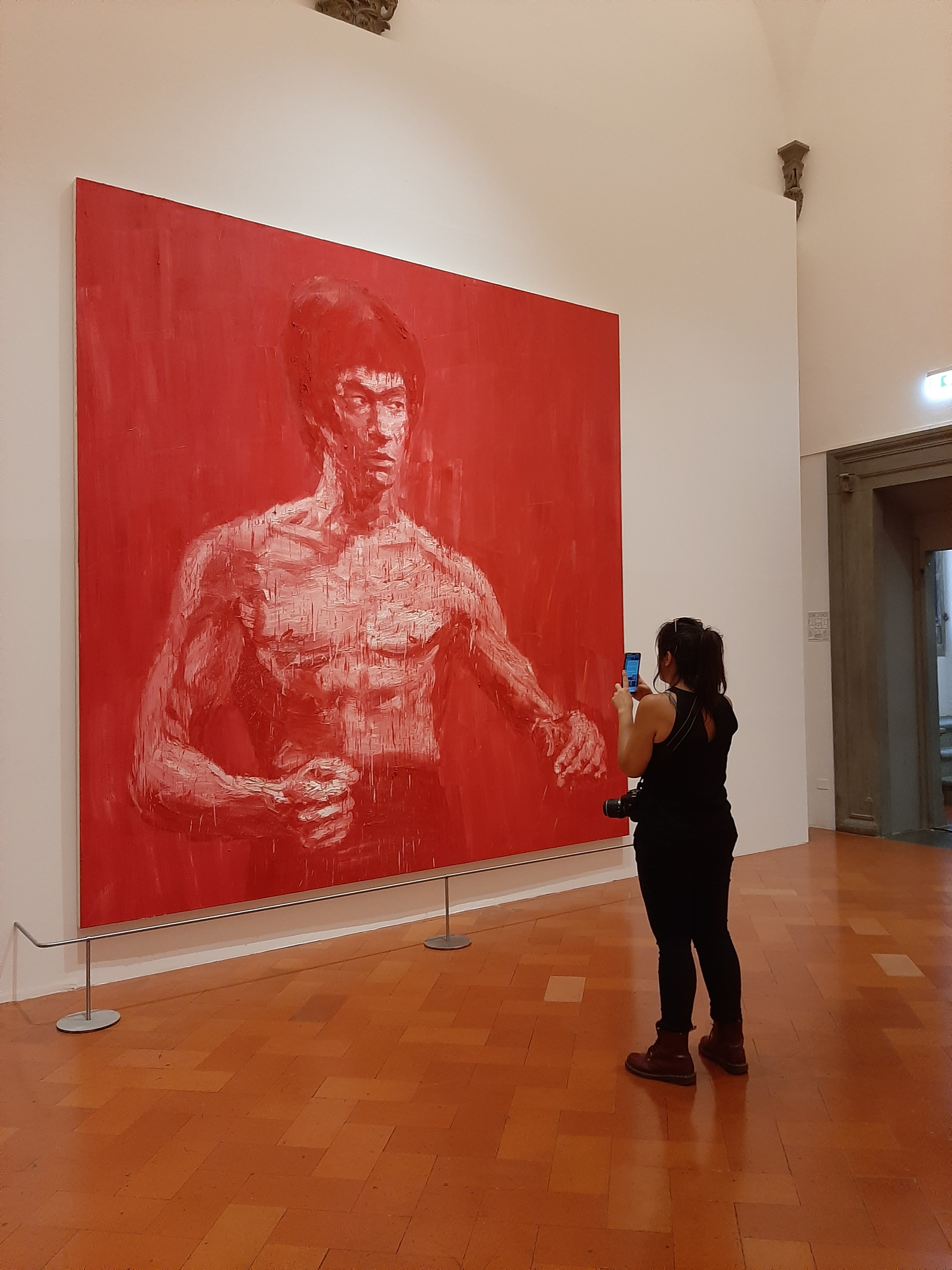
Yan Pei-Ming’s first portraits depicted anonymous people, except for those portraying Mao Zedong, the inevitable subject of all propaganda painting during the Cultural Revolution (1966–76). The Chairman’s image became central for our artist, who integrated it into his personal experience especially when, having left China, he was able to extrapolate the leader’s figure from its celebratory dimension. A part of Yan Pei-Ming’s work is devoted to subjects that belong to the imagery associated by Westerners with China: the tiger and the dragon, the Buddha and Bruce Lee.
The actor – a mythical figure who perfectly embodies the birth of globalization and is considered the link connecting Hollywood to Hong Kong – is related to the tiger and the dragon, which are both Shaolin Kung Fu forms, one of the most important and ancient styles of Chinese martial arts. The Dragon, a good omen and the emblem of China itself, plays a predominant role in mythology and embodies the concept of yang, the masculine element. Along with the Tiger, it is also one of the twelve signs of the Chinese zodiac, with its long whiskers and its paws ending in sharp claws, though it is the only legendary beast of the twelve. It appears that the precepts of oriental martial arts apply to Yan Pei-Ming’s painting as well.
Yan Pei-Ming
Painting Histories
Palazzo Strozzi Firenze
(7 July – 3 September 2023)
https://www.palazzostrozzi.org/en/
